Updated October 22, 2025 06:24PM
Rivian’s First E-Bike Is Absolutely Wild — In a Good Way
Also is a new e-bike brand backed by electric truck powerhouse Rivian that aims to offer a better micromobility experience. The design is unlike anything we've seen.
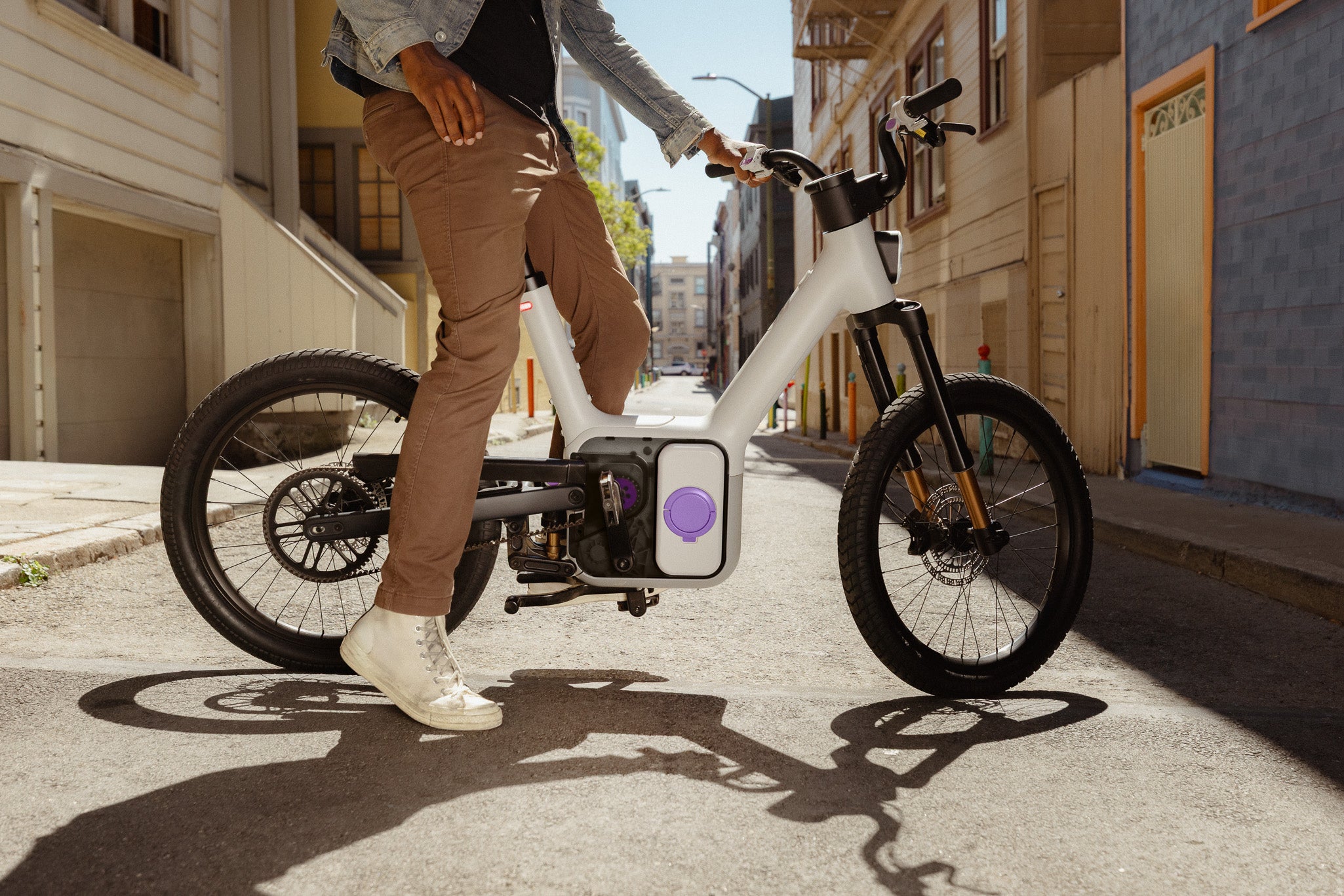
(Photo: Courtesy Also)
Rivian has already proven it can build adventure vehicles with serious off‑road credibility. Now, the electric‑truck maker’s DNA is showing up somewhere new: micromobility. A stealth startup called Also — staffed with former Rivian engineers and backed by its early investors — has quietly emerged from the wings to target the other end of the mobility spectrum.
Instead of rugged overlanders, Also is building sophisticated e‑bikes and connected gear designed around one concept: a smarter, more personal ride experience. Its first product, the Also TM‑B, debuts this week and looks to blend EV‑grade engineering with the modular creativity of urban cycling.
Also Is Related to Rivian, but Not Really
Although it shares Rivian’s design language and resources, Also operates independently. Think of it as a brainchild born from the same electric‑mobility family tree — but focused on the scale of bikes instead of trucks.
Also says its development team includes software specialists from Rivian’s connected‑platform group who helped shape the automaker’s navigation and over‑the‑air systems. That expertise has trickled down, to the pedals, if Also is to be believed.
ADVERTISEMENT
Meet the Also TM‑B E‑Bike
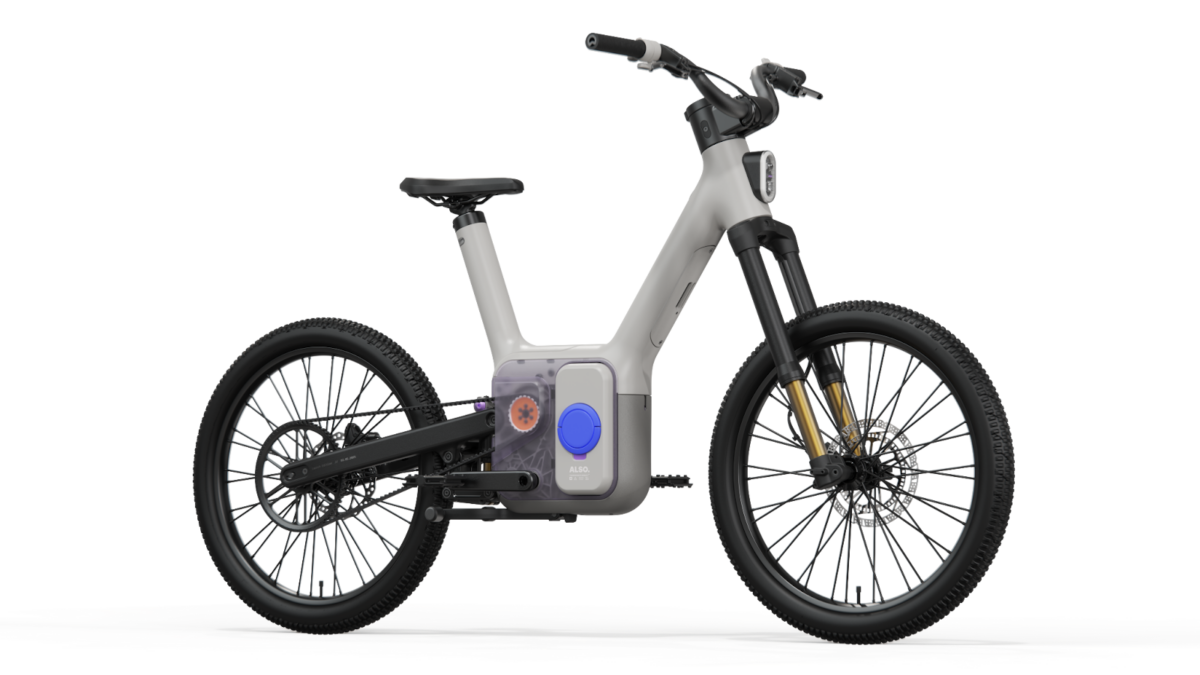
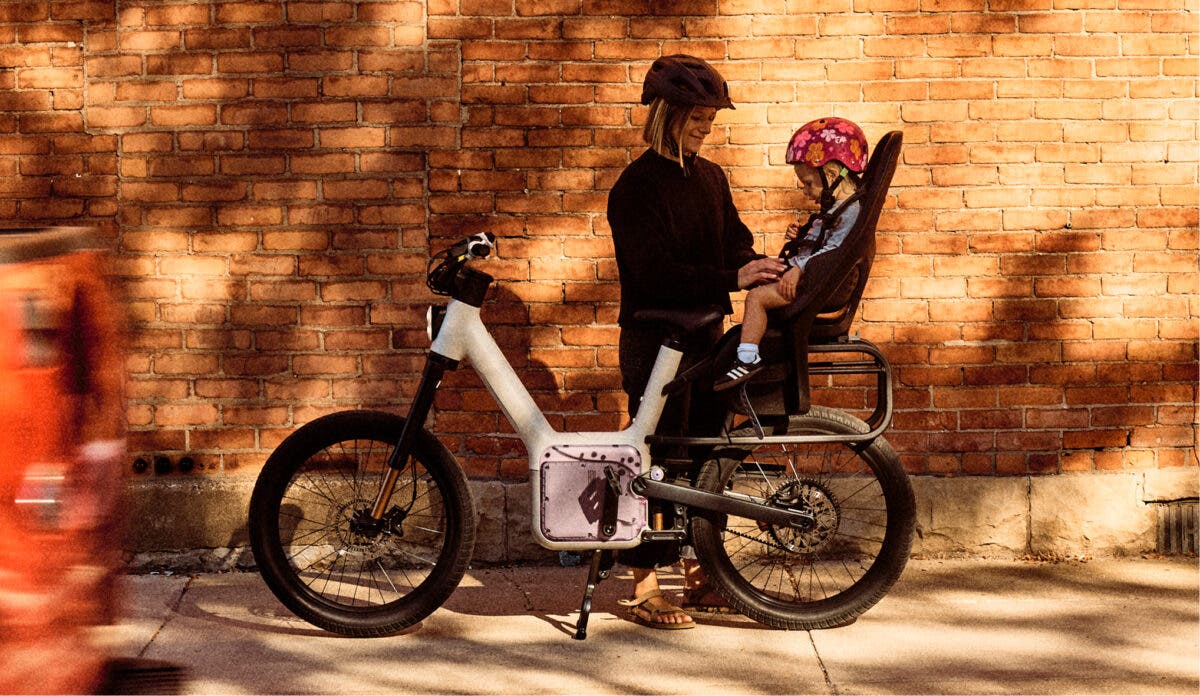
At first glance, the TM‑B looks equal parts trail machine and high‑tech commuter. Underneath its sculpted frame sit a few firsts for the cycling industry, says Also.
The first is the modular frame system, which allows riders to swap between two frame sizes – or a chopper-style bench seat – without having to outright change the bike. Doing so allows the bike to fit riders between 4’11″ and 6’8″ says Also, a range I’ve never quite seen with an e-bike previously. There’s also a rear rack that allows the bike to carry up to 35 kg (77 pounds) claimed.
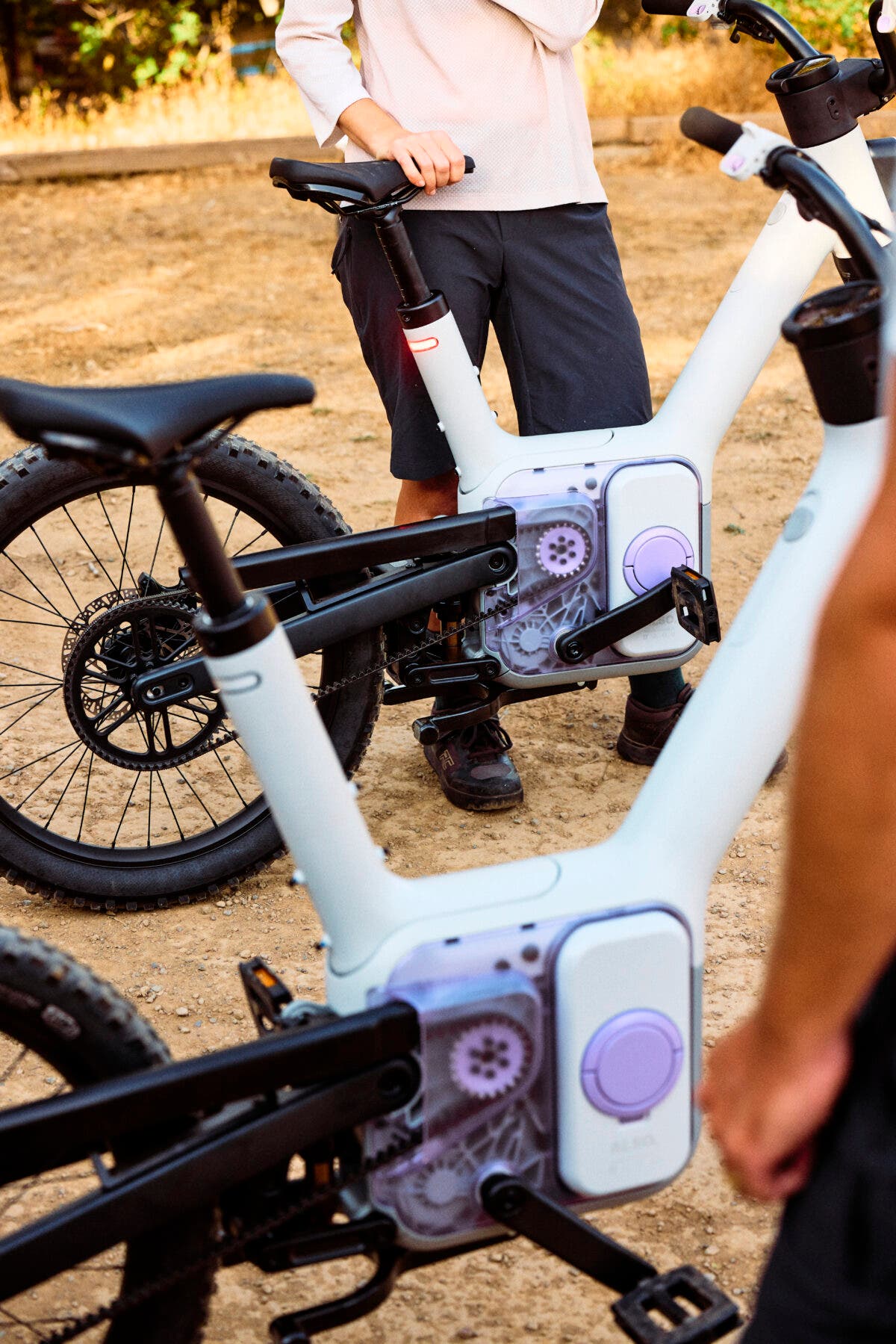
The fork is a custom design for Also’s TM-B e-bike. The TM‑B’s inverted front suspension fork carries mounts for a load‑rated front rack—an unusual choice that increases carrying capacity, though it also means handling could feel livelier under weight, according to Also. Integrated into the front rotor is a tone ring suggestive of front‑wheel ABS, one of the first uses of true anti‑lock braking in a bicycle.
ADVERTISEMENT
Then there’s the motor, which Also designed specifically for this bike. The pedals aren’t directly connected to the motor’s overall output. Rather, the rider’s pedaling powers a generator that then goes back into the battery. Overall assist of this claimed Class 3 bike is doled out via the software, with its shifting also electrically controlled. We’ve yet to figure out if this has a gear box integrated in the motor, and will update this story accordingly.
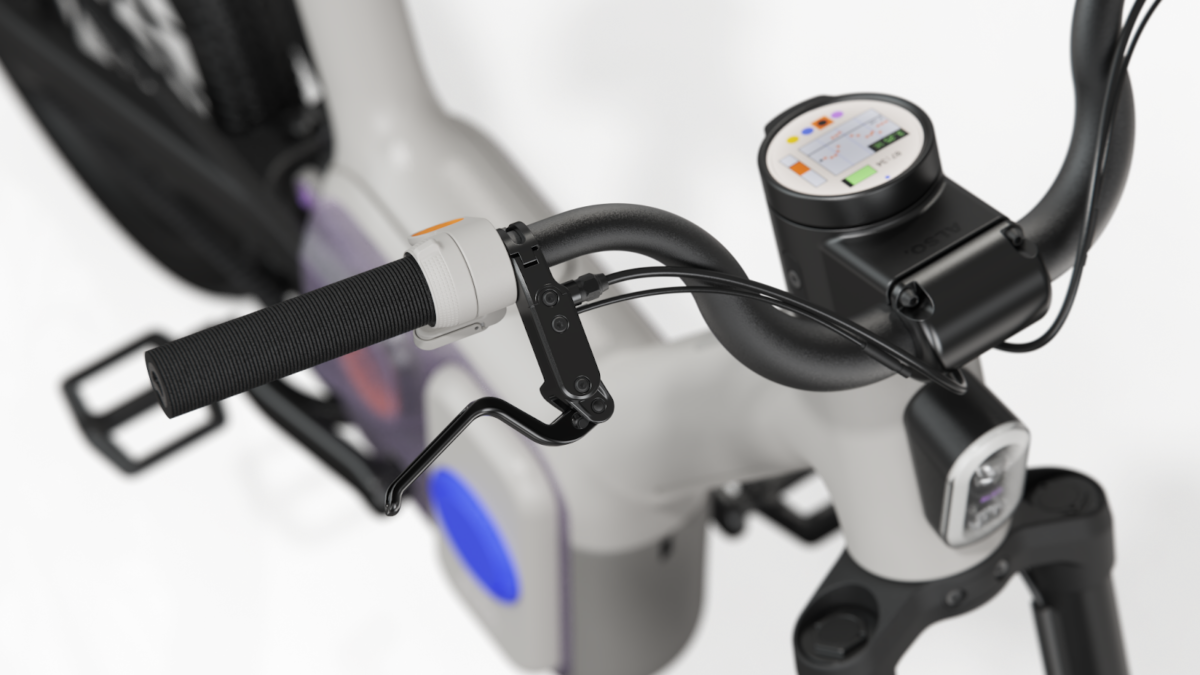
Riders will also be able to add juice to the battery through regenerative braking, one of the few times we’ve seen the tech on any e-bike, much less one with a mid-drive motor.
That motor offers a claimed 180 Nm of torque, with electric pedal assist up to 28 miles per hour (48 kph). Throttle assist is also available up to 20 miles per hour (32 kph).
Two batteries will be available at launch: a 538 Wh battery offering up to 60 miles (~100 km) range, and an 808 Wh battery offering up to 100 miles (~160 km) of range.
Three trims will launch:
- TM‑B Standard, designed for general commuting and everyday range
- TM‑B Performance, with uprated suspension and adjustable ride modes
- TM‑B Limited, the exclusive first‑run model featuring the Performance kit and a limited‑edition finish
ADVERTISEMENT
There’s Even a New Helmet
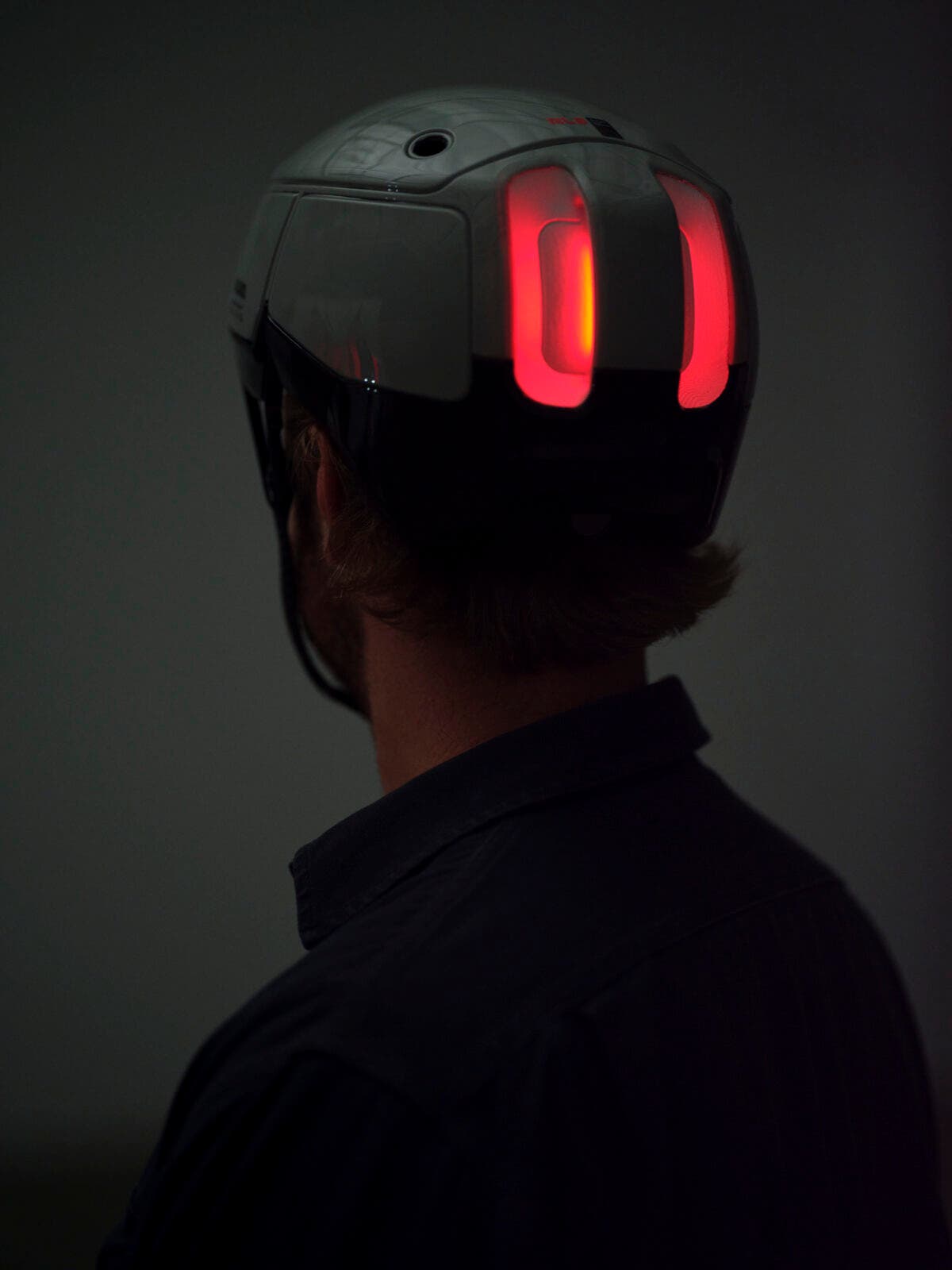
Also isn’t stopping with bikes. Alongside the TM‑B, the company is introducing a connected safety helmet called the Also Alpha Wave. Besides all the connected tech, it features a next‑generation Release Layer System (RLS) technology, developed in partnership with biomechanics researchers at the University of Strasbourg.
Traditional helmets rely on foam compression and limited slip layers such as MIPS to reduce rotational forces during a crash. RLS uses embedded polycarbonate micro‑bearings between sacrificial shell panels. When an impact occurs, the outer layer shears away, allowing the main helmet to rotate independently from the force vector.
It’s not the first time we’ve seen something like this. The Canyon Disruptr features a similar system that seems to work well, given the helmet just scored a perfect 5.0 on the Virginia tech scale. Nonetheless, it’s wild new tech and stuff we’re excited to dig into.
ADVERTISEMENT
Additionally, the helmet features the Highbar strap system, integrated lights to help riders see and be seen, and an integrated audio system with four wind-shielded speakers. Further, Also says the helmet gets two noise-canceling microphones, enabling riders to listen to music or podcasts, take calls, and receive turn-by-turn navigation, all controlled from the TM-B’s Portal and hand-control interface.
We can’t wait to dig into all of this. Stay tuned for more on this developing story.