Published June 23, 2021 06:53AM
North American contingent on the rise at Tour de France
Michael Woods sees leadership, with Sepp Kuss, Neilson Powless, Brandon McNulty and Sean Bennett in key support roles.

Powless and Kuss, shown here at the 2020 Tour de France (Photo: James Startt/Velo)
Seven North Americans — four U.S riders and three from Canada — will line up this weekend for the 2021 Tour de France.
Michael Woods (Israel Start-Up Nation), back for his second Tour, headlines the Canadians while a crop of promising young U.S. riders will be represented across four teams.
Neilson Powless (EF Education-Nippo) and Sepp Kuss (Jumbo-Visma) are back for their second appearance following their successful Tour debuts in 2020, while Sean Bennett (Qhubeka-Assos) and Brandon McNulty (UAE-Team Emirates) make their respective Tour debuts.
“I’m coming to the Tour this year with more experience and confidence than I had last year,” Powless said Tuesday. “Every year you get stronger and learn a little more, and I’m hoping to put those lessons I’ve learned over the past year into practice.”
ADVERTISEMENT
Kuss, who made a splash last year with Jumbo-Visma, returns in a bid to help Primož Roglič win the yellow jersey, while McNulty was tipped to join UAE-Team Emirates after being initially scheduled to race the Giro d’Italia to help Tadej Pogačar defend his 2020 Tour title.
“We have the defending champ, but we’ll be riding for him, and we’ll see if I can go well in the time trials,” McNulty said. “I’d love to help Tadej win another overall. Originally, the Giro was the decision, but the Basque Country went so well that we decided to switch to the Tour for Tadej.”
Stronger Canadian accent
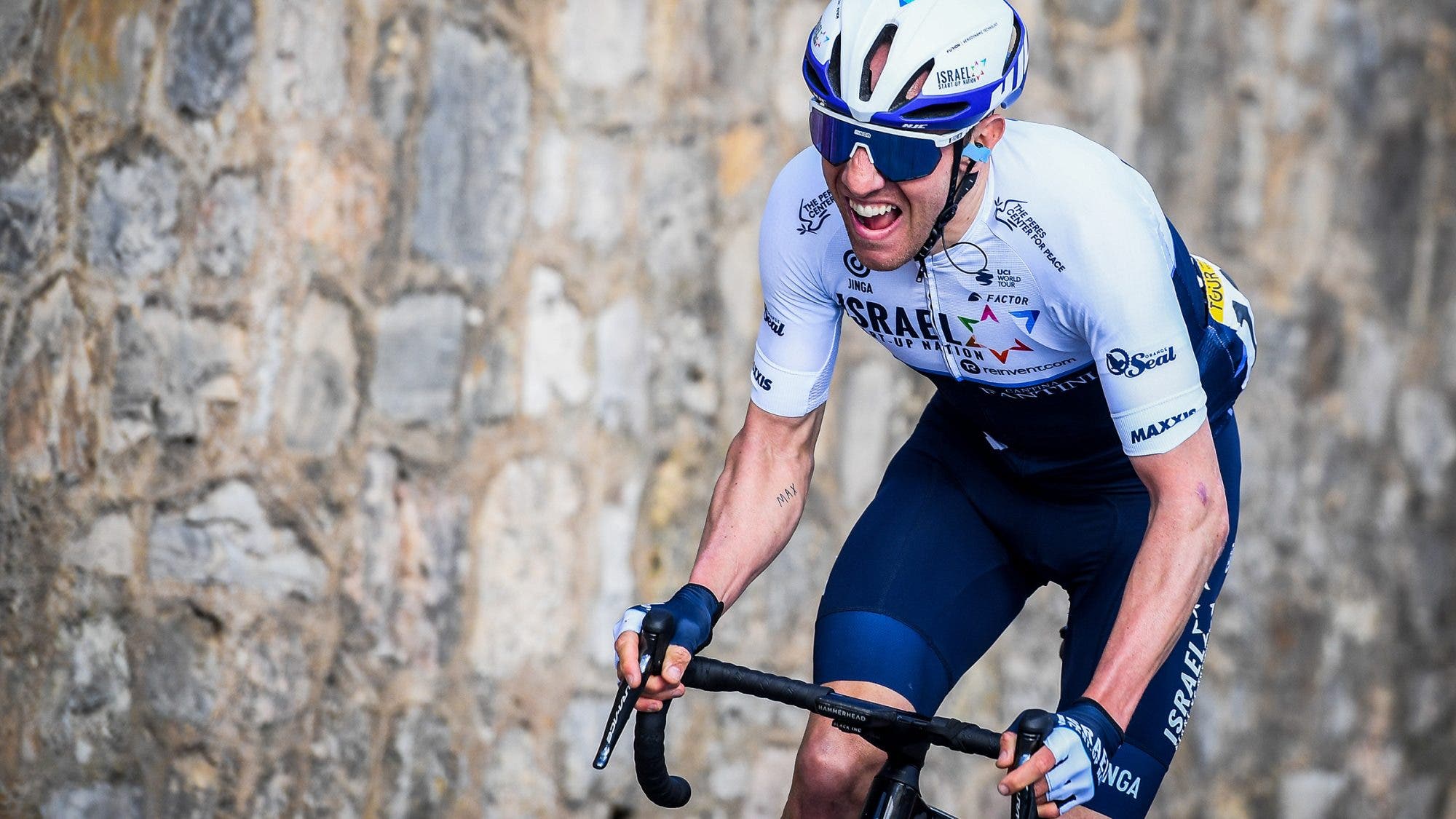
Woods’ captaincy to lead Israel Start-Up reflects a deeper Canadian presence in the WorldTour.
ADVERTISEMENT
Israel Start-Up co-owner Sylvan Adams, though now an Israeli resident, made his fortune in Canada. Premier Tech joined Astana as a co-sponsor in 2021, meaning there are now two WorldTour teams with strong ties to Canadian cycling.
Also read: Woods handed leadership as Froome slots into helper role
Hugo Houle (Astana-Premier Tech) returns for his third Tour start, while Guillaume Boivin also debuts for Israel Start-Up Nation.
The arrival of Woods to lead Israel Start-Up is the first Canadian to see leadership duties at the Tour since Ryder Hesjedal, Canada’s only grand tour winner with the 2012 Giro, harbored Tour ambitions in the last decade.
ADVERTISEMENT
Quality over quantity for 2021
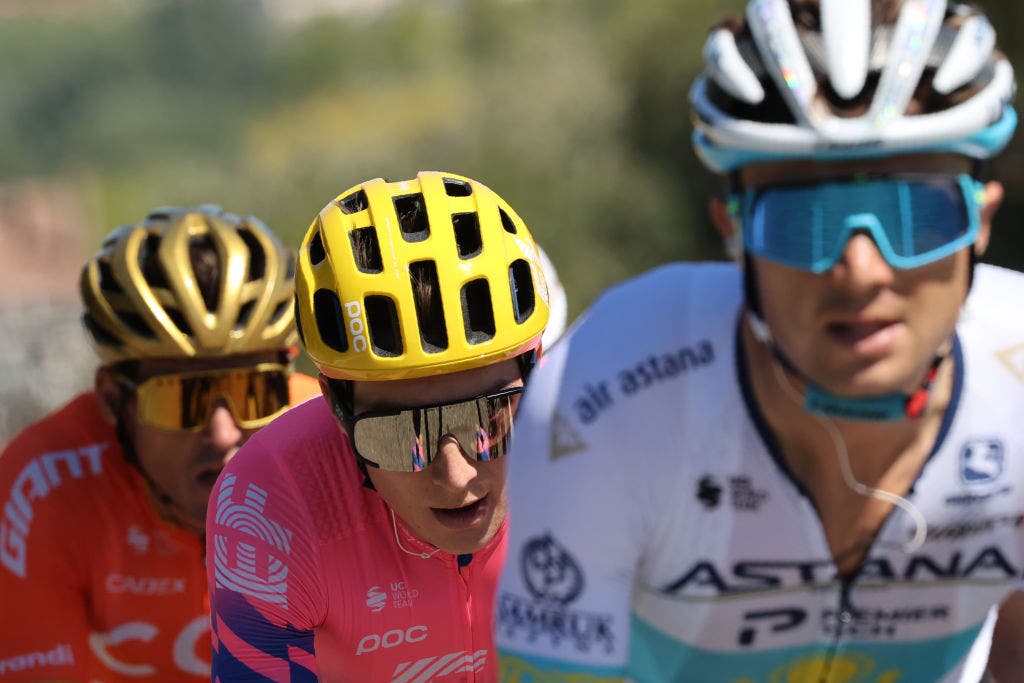
Since 1981, when Jonathan Boyer made history as the first American, there’s been at least one U.S. rider in every Tour since. A high-water mark of 10 came in 2011 — matching the historical record set in 1986 — but no more than five Americans have started the Tour since 2014, when nine U.S. riders crowded into the Tour peloton.
Over the past six editions, the U.S. has fielded between three and five riders per Tour, so this year’s American crew is on par with the latest tendency.
ADVERTISEMENT
What’s behind the smaller number? A few things.
First off, the reduction of Tour rosters from nine to eight starters in 2018 eliminated 22 total spots from the peloton, putting the pinch on Americans to find space. With one fewer spot, teams are under pressure to bring the absolute best, and will often leave home younger riders or racers that do not align perfectly with the team’s stated Tour goals.
American participation waned in the early 1990s as the LeMond generation retired, and a new one arrived. The U.S. Postal Service put the U.S. back on the Tour map, but a string of high-profile doping scandals marred that generation’s legacy. From 1997 to 2014, there were at least six Americans racing every July (with an exception of four in 2008). In 2011, the number hit 10, matching the all-time record in 1986 during the 7-Eleven/LeMond era.
ADVERTISEMENT
All eyes are on Kuss, Powless, and McNulty to see if they can develop into GC contenders across three weeks. The US hasn’t since a legitimate podium contender since Tejay van Garderen twice finished fifth in the Tour (2012 and 2014).
US riders in the Tour de France by year:
2021 — 4
2020 — 3
2019 – 4
2018 — 5
2017 — 3
2016 — 5
2015 — 3
2014 — 9
2013 — 6
2012 — 8
2011 — 10
2010 — 8
2009 — 7
2008 — 4
2007 — 6
2006 — 8
2005 — 9
2004 — 7
2003 — 6
2002 — 9
2001 — 8
2000 — 9
1999 — 8
1998 — 6
1997 — 6
1996 — 3
1995 — 2
1994 — 3
1993 — 3
1992 — 5
1991 — 5
1990 — 7
1989 — 5
1988 — 6
1987 — 7
1986 — 10
1985 — 2
1984 — 2
1983 — 1
1982 — 1
1981 — 1