Published August 16, 2021 03:10AM
Vuelta a España: Picón Blanco delivers vertical pain early
Vuelta packing mountain punch early in a climb that's steep enough to make some differences just three days into the race.
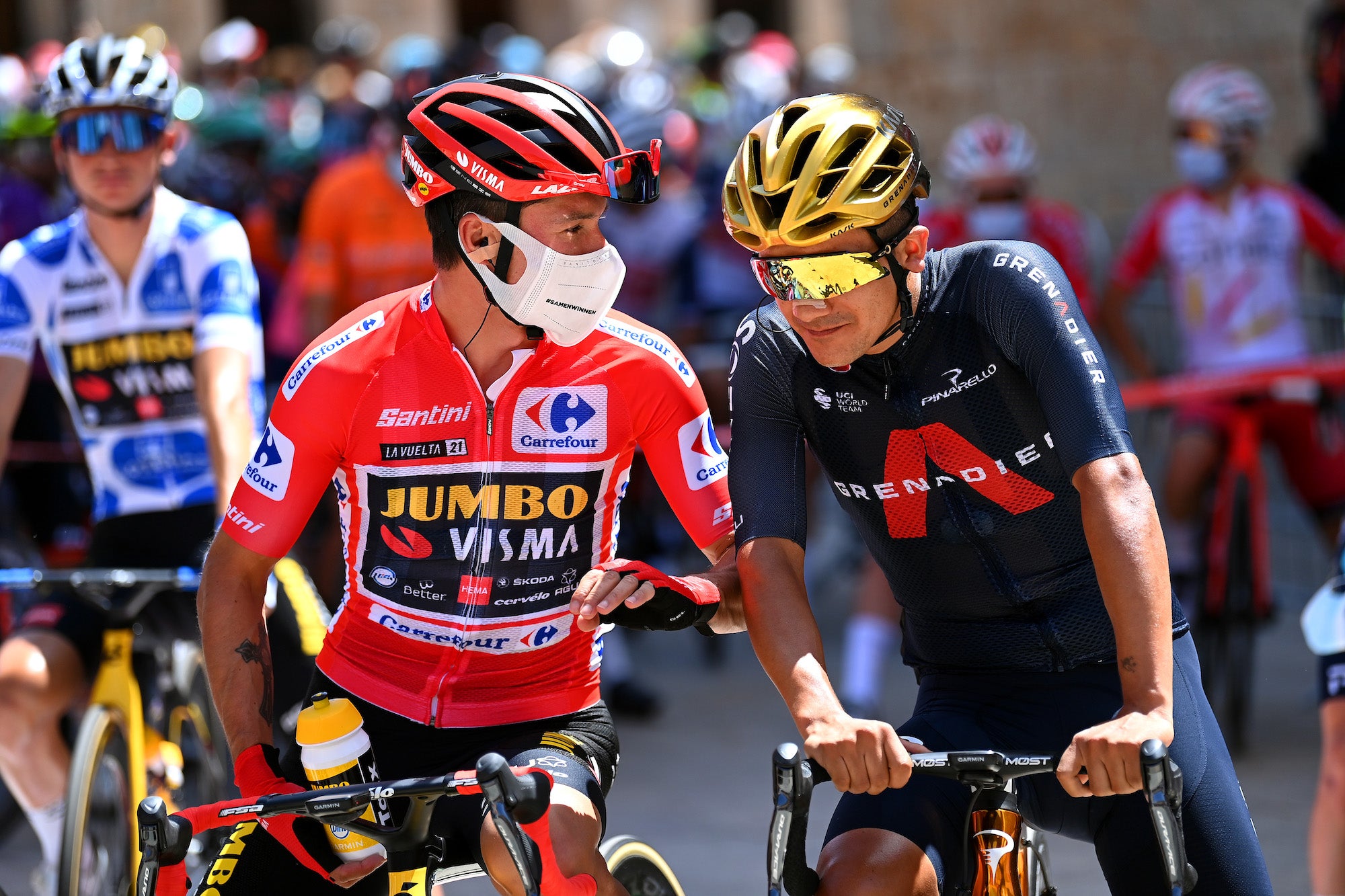
All eyes will be on Primož Roglič and Richard Carapaz in Monday's summit finale. (Photo: Stuart Franklin/Getty Images)
BURGOS, Spain (VN) — The 2021 Vuelta a España isn’t wasting time before going full-on vertical.
Following Sunday’s bunch sprint, the Spanish grand tour turns straight into the mountains Monday with Picón Blanco, the first of seven major mountaintop finales in this year’s route.
“It’s the real deal,” said Bahrain-Victorious rider Jack Haig, who lost 38 seconds Sunday after being caught up behind a late crash. “We did it a few years ago at the Vuelta a Burgos. It’s hard. It’s the first real test to see where everyone is.”
In what’s coming especially early in a grand tour, a major summit finale will be in the cards right from the gun.
Also read:
- Yates, Carthy lose time in late-stage crash Sunday
- Primož Roglič powers to TT victory in Burgos
- Sepp Kuss climbs into KoM jersey
The 7.6km climb on the northern edge of the Burgos province is famous among local riders. With an average grade of 9.3 percent, the steepest grades are in the final 3km with one ramp hitting 18 percent.
ADVERTISEMENT
Coming so early in the race means that riders need to be sharp right from the gun.
Vuelta a España follows a different drumbeat
Seeing a summit finale so early in the course reflects the continued evolution of the Vuelta. Unlike the Giro d’Italia or Tour de France, which typically follow a more traditional blueprint for grand tours, the Vuelta isn’t afraid to spice it up.
Throughout this year’s Vuelta, the climbing stages are sprinkled across the race, rather than having them all bundled together in the final week, as is often the case in the Giro or Tour.
This year’s Vuelta sees its major summit finales spread across the course throughout the entire route, with major mountaintop finales in each of the three weeks.
ADVERTISEMENT
“Having a climb like that so early means that the guys who come here to win have to be ready to race early,” BikeExchange sport director Matt White said. “The cream will rise to the top quickly.
“The template at the Vuelta is a little different than the Tour, which has its tradition of the Pyrénées and Alps,” White told VeloNews. “The Vuelta isn’t afraid to mix things up and the race is more diverse, with the mountains scattered throughout the race. The Vuelta is always hard, second to none.”
White said organizers are also hoping that a singular rider isn’t strong enough to ride everyone off the wheel, and take the air out of the GC battle right from the gun.
A big advantage so early in the race could force others to attack, but it could also deflate the GC battle if a major rider on a strong team opens up major gains.
ADVERTISEMENT
Of course, the rider most poised for that is Primož Roglič. The Slovenian won Saturday’s time trial, and will be looking to hit out on Picón Blanco if he can.
“We will see how it goes [Monday],” Roglič said. “If there’s a chance to take time, you have to do it. The climb is hard enough to see some time differences between the riders.”
For Roglič, he seemed more worried about battling crosswinds and avoiding crashes than what lies await at the top of the Vuelta’s first summit finale.
Arch-rivals Egan Bernal and Richard Carapaz (Ineos Grenadiers) cannot afford to lose any more time and will want to try to take back some of the 25 seconds or so they ceded against the clock to Roglič in Burgos on Saturday.
“I think it’s too hard to make predictions for this Vuelta,” said Trek-Segafredo sport director Yaroslav Popovych. “As usual, the third week will be the decisive one, but an unprecedented and very hard finish like Picón Blanco already in stage three says a lot about the difficulties of what the GC contenders will find.”
ADVERTISEMENT
That’s how the Vuelta rolls — always a little different, always very interesting.