Updated December 4, 2024 01:04PM
80 and Still Going Strong: Bill Humphreys' Journey to the UCI Gravel World Championships
The octogenarian competed in Flanders last October, with a singular goal: to become a world champion.
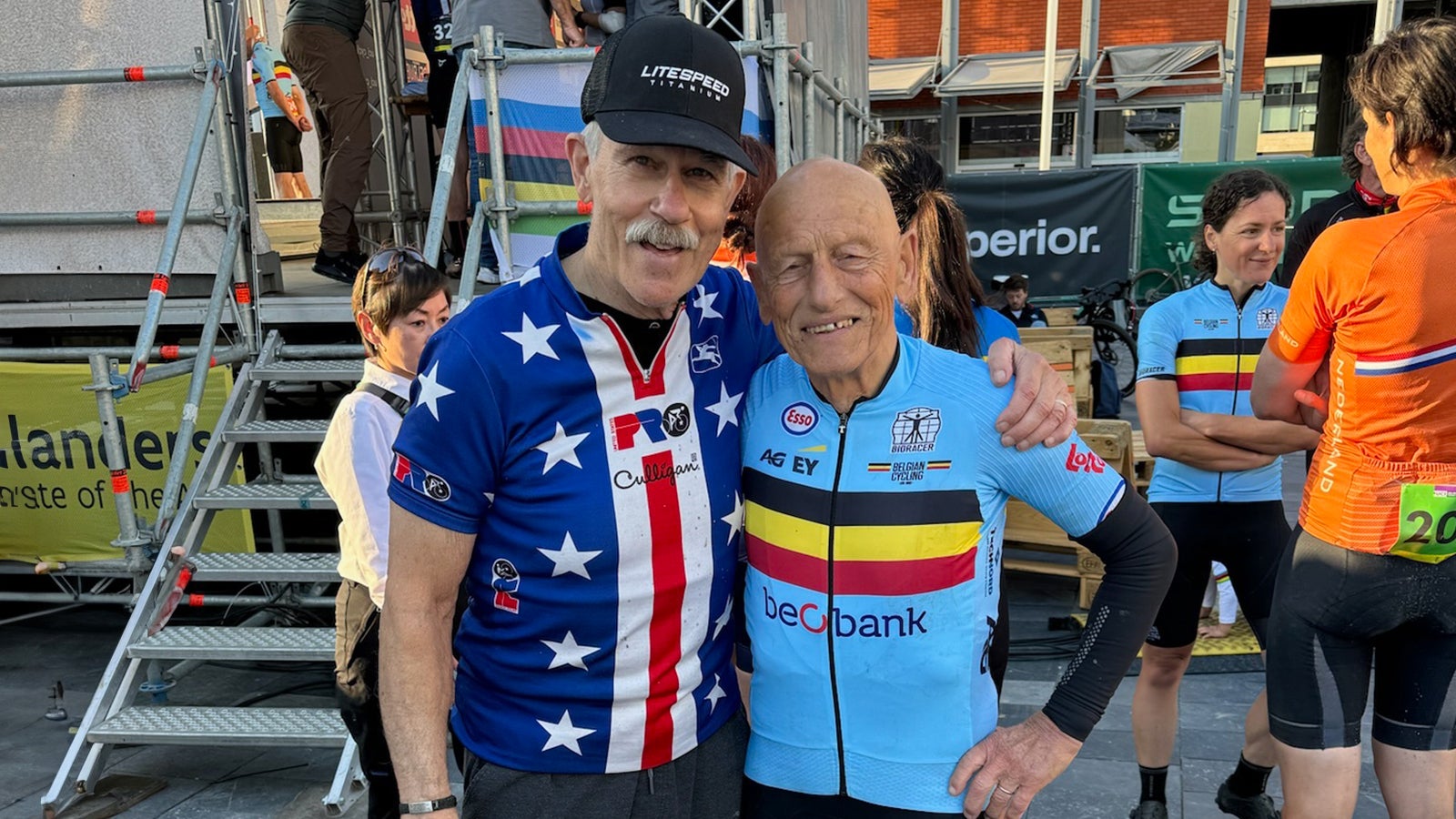
Bill Humphreys and Roger Landeloos at the 2025 UCI Gravel World Championships
It was five years ago when I started thinking about this fast-growing segment of cycling called ‘gravel riding.’ At 75, after having some success in both mountain and road biking careers, I wondered, ‘am I too old? Is it too late to take up a new form of racing?’
I had given up mountain biking about 10 years earlier because the top riders I rode with took hard falls way out on the trails where nobody could find them. Going out alone was just too risky, and I put my focus back on road riding where I had competed internationally, but I missed the low-key ambiance and the adventure of exploring trails.
For my 75th birthday, Raleigh Bicycles, who sponsored me years ago, gave me a mid-level gravel bike. On my very first ride, I found myself deep in the woods on gnarly single-track. I was lost, and nobody knew where I was. I still had the skills, it was fun, and I was hooked.
ADVERTISEMENT
Then, at about this time last year, the UCI announced that Flanders, Belgium would be hosting the third UCI Gravel World Championships. If I was ever going to race in another World Championships, this was the place to do it. My wife supported my decision and gave me the OK, knowing that it was the chance of a lifetime. That and the fact that there were no long steep climbs in that area of Belgium.
When my adult son, Ian, heard I was entering the race, he jumped on the opportunity to go with me. I had made my decision without thinking through every detail of how this would come about, but I knew there would be signs along the way that would let me know if it was the right decision.
Signs
That first sign occurred in early June, about three weeks before the Highland Gravel Classic a world championship qualifying race in Arkansas.
ADVERTISEMENT
I still work full-time in sales, and I told my sales manager that I would be taking a day or two off for a weekend trip to Fayetteville. He said the company had a client in Fayetteville that needed some service. I could fly down there for the week at the company expense and then qualify, which is exactly what happened. This saved me vacation days, not to mention airfare, rental car, and hotel expenses, which would have cost me more than I could afford. Not many corporations would support an employee’s hobby, and I am still grateful for their cooperation.
I was the only one registered in the 80+ group, so all I had to do was finish to qualify. It was a beautiful but difficult course with 5,000 ft of climbing and descending dirt roads in 50 miles, where the world’s course would only have 2,800 ft of climbing in the same number of miles. I finished in 5.5 hours and was totally exhausted but I had officially qualified to compete in the World Championships.
By the time I got back home, my son was saying things like, “when are we leaving, and have you bought our tickets yet?” He was serious about making the trip with me, and now I knew everything else would fall in place.
In short succession, people from within the bike industry began to offer their support.
ADVERTISEMENT
Over 20 years ago, I used to work for Litespeed Titanium Bicycles. Some guys there had heard a rumor that I was coming out of the mothballs and wanted to know if they could help. That call resulted in my being connected to the right person at Shimano, as well as a generous sponsorship offer from a new German gravel bike brand.
Then, During this time, Vittoria, the Italian tire company, sent me tires, Wahoo sent me an Elemnt and heart rate monitor, a helmet arrived from Lazer, and great ADDRA protein recovery bars from Eric Zaltas. I found a great coach in Aidan Hammond of Bike Fitting Ireland.
So, this venture’s momentum was energized by people just wanting to help. There was no sideways agenda on anyone’s part.
Support
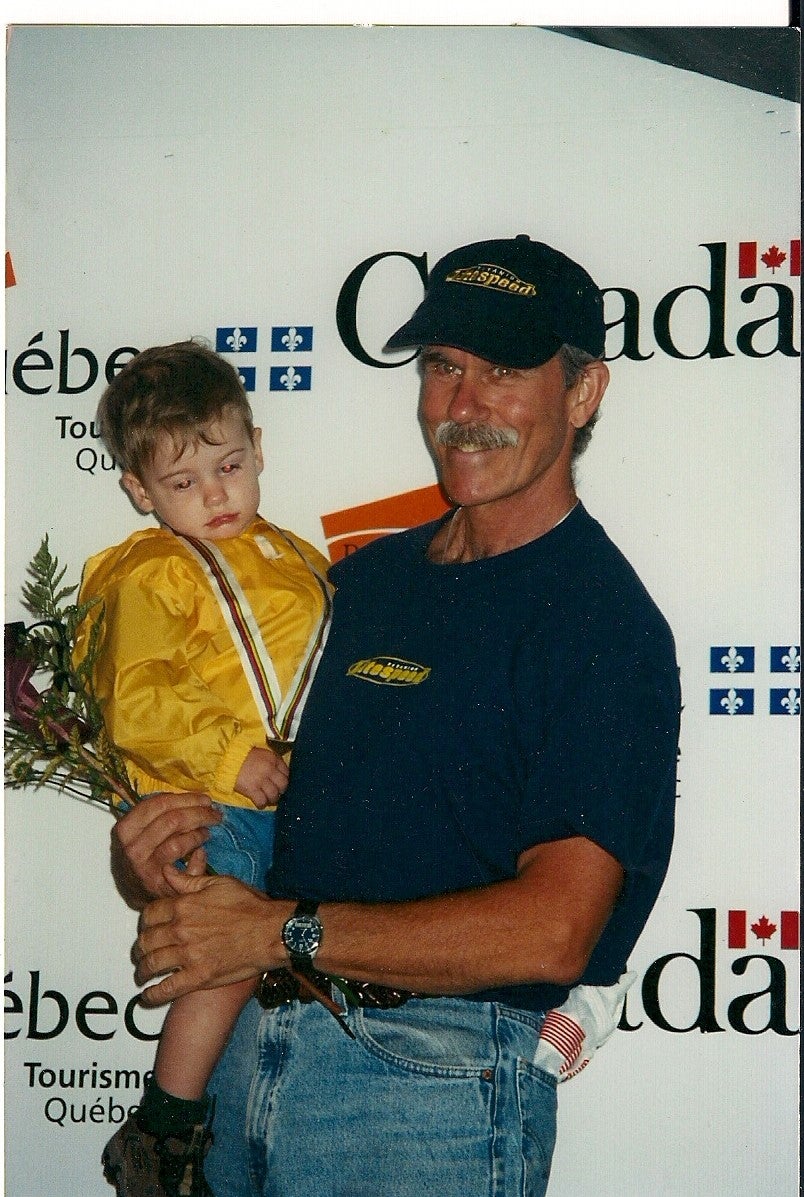
Thanks to all the love, energy, checks from generous friends, and industry sponsorship, my son and I are going back to Europe for the first time since he was 11, and he will watch his dad ride a World Championships for a second time since he was one-year-old at the Masters World Mountain Bike Championships in Quebec.
ADVERTISEMENT
I want to win and to be on the top step of the podium. I don’t want to hear some other countries’ national anthem, and I am checking with the organizers to see if there are any other 80-year-olds registered. I know of 3 that have qualified, so I am thinking there could be 4 or 5 of us, which will make for a real race with tactics that I have never had a chance to use in any of my previous gravel events.
Being the oldest rider by far at any gravel event, my challenge has always been to survive the climbs and descents, eat and drink properly, keep my focus, and finish without crashing. The high points and satisfaction took place while feathering the brakes on a washed-out downhill section of dirt road at 30 miles per hour and still having the skills to handle the single track after 4 or 5 hours on the bike.
When the UCI sends me an email that another 80-year-old from Belgium born in 1944 has registered, I am pleased that it is a Belgian because they represent the true essence of hard-nosed European racing. I then find out from another Belgian, Adri, who is part of the Litespeed Owners Group on Facebook, that my competitor will be Roger Landeloos who was born in a house on the race course, rides the course all the time, and was second in the European Gravel Championships on a similar local course last year.
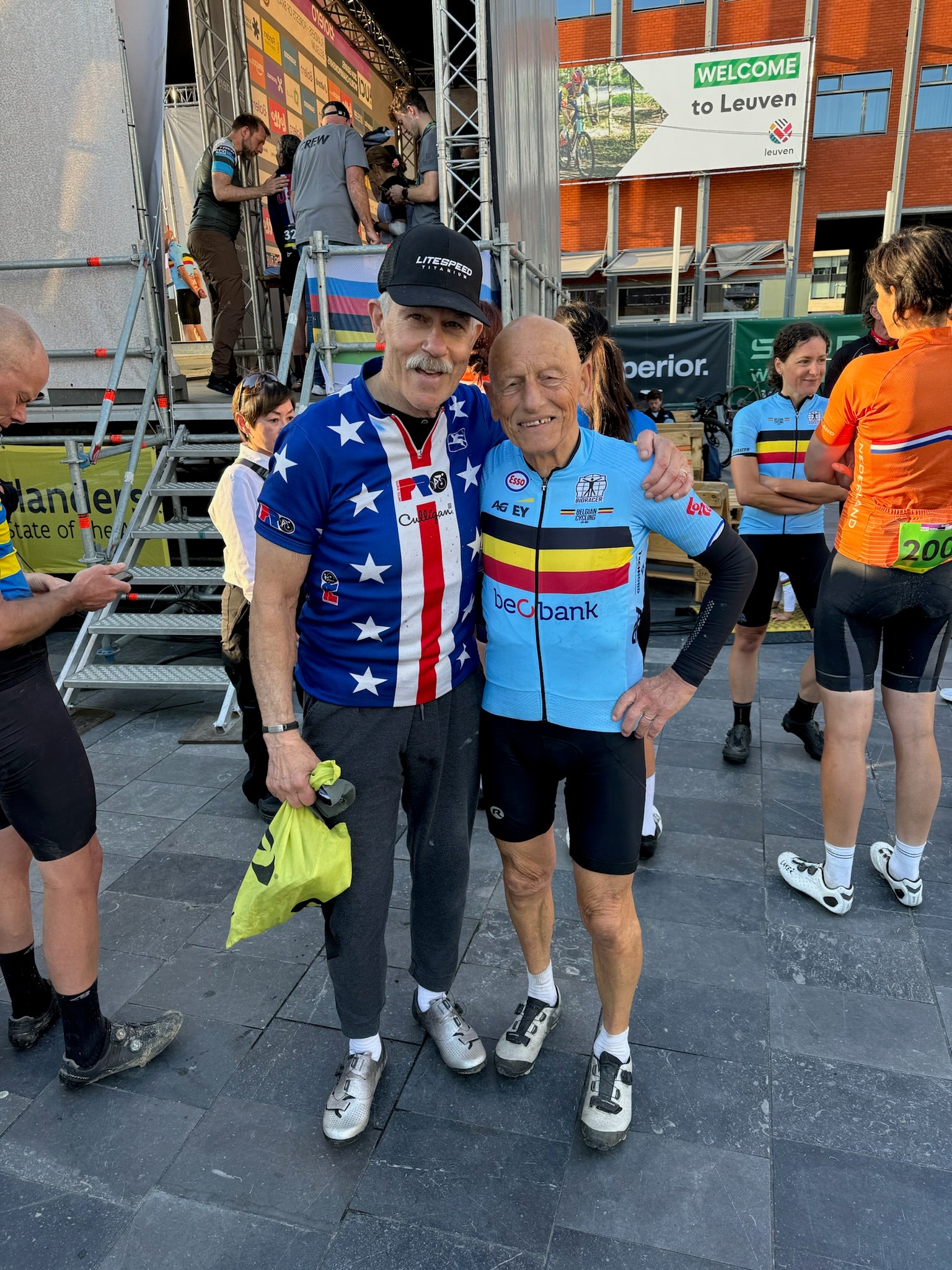
I email some close friends to say, “I wouldn’t have it any other way.” But deep down inside, I know I have some major mental and physical adjustments to make. I must increase my envisioning to include a variety of situations and tactics and never let the second step on the podium creep into my thoughts.
ADVERTISEMENT
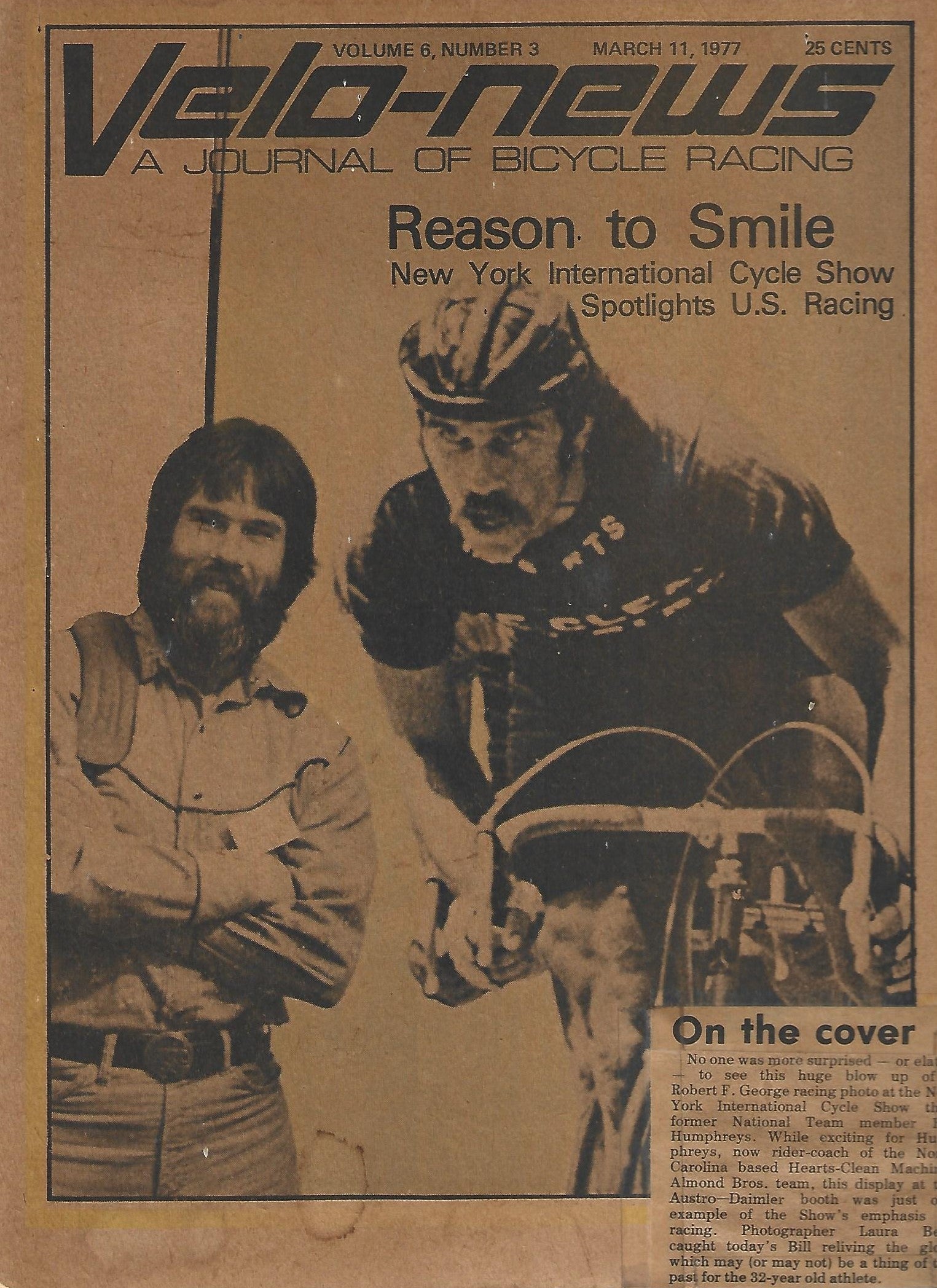
My list of contributors had grown to over 50 people—a diverse group made up of former teammates, training partners, truck drivers and adversaries to kids (now grown) I had coached, others I had worked for or were former sponsors, my sister, high school buddies, my doctor, and co-workers at my current job.
I can only speculate on what their motive/belief is for supporting me, but trust must be near the top of the list. It is like a bucket list item that they know they can’t get done, but they sense that I will follow all the way through and represent them well. Many had read bits and pieces of my memoir rough drafts in recent years, and they might be living vicariously through me on another crazy adventure.
Whatever it is, convincing them to open their wallets and hearts in backing my dream is instilling confidence, gratitude, and a positive attitude that is keeping me optimistic every day.
The day before
Ian and I drive down to the start town of Halle to pick up my race number, where there are thousands of riders there from all over the world.
ADVERTISEMENT
The registration line is long, and I tell Ian to go for a sightseeing walk as I begin chatting with some young riders from South Africa. When I tell them I won a stage in the 1975 Tour of Winelands outside of Cape Town, their jaws dropped open in disbelief that I was 80 and still racing.
I saw lots of men and women in USA jerseys warming up while checking out the 12-kilometer loop in Halle before the course zigzags for 40 miles to the finish in Leuven. I am in full rest mode and figure that I will be taking my time over that loop, just conserving and keeping an eye on Roger, and that we won’t begin testing each other for at least the first hour. I am excited about being fresh and using my strength cautiously while competing on a course that doesn’t have 5,000 ft of climbing.
We have a great dinner at a local restaurant with the “Irish Crew,” consisting of my coach Aidan Hammond and his two former riding buddies Fran O’Sullivan and Mick Doyle, who have flown in from Dublin to have some fun and support me. Aidan is one of Ireland’s better-known coaches and bike fitters, whom I met on my 75th birthday and Tour of Ireland reunion ride. He was happy to help me with some coaching when I called him last March, and we’ve become good friends in the process. It’s great to see Ian smiling and laughing at Irishmen’s jokes after spending a week in a hotel room with his dad.
ADVERTISEMENT
They make their plans to meet up with Ian before the start, where they will proceed to a “Feed Zone” to give me bottles and gels at the 65-kilometer marker.
Race day
We arrive about an hour and a half before the start, and the town is over-run with riders getting dressed and warming up on the course. I take a ride over the first 5 km and become aware of the ups and downs and sharp corners along with the different types of road surfaces including cobbles, gravel, dirt, and mud. I load my pockets with gels, bars, and use Ian’s little Camel Bak loaded with electrolytes under my jersey.
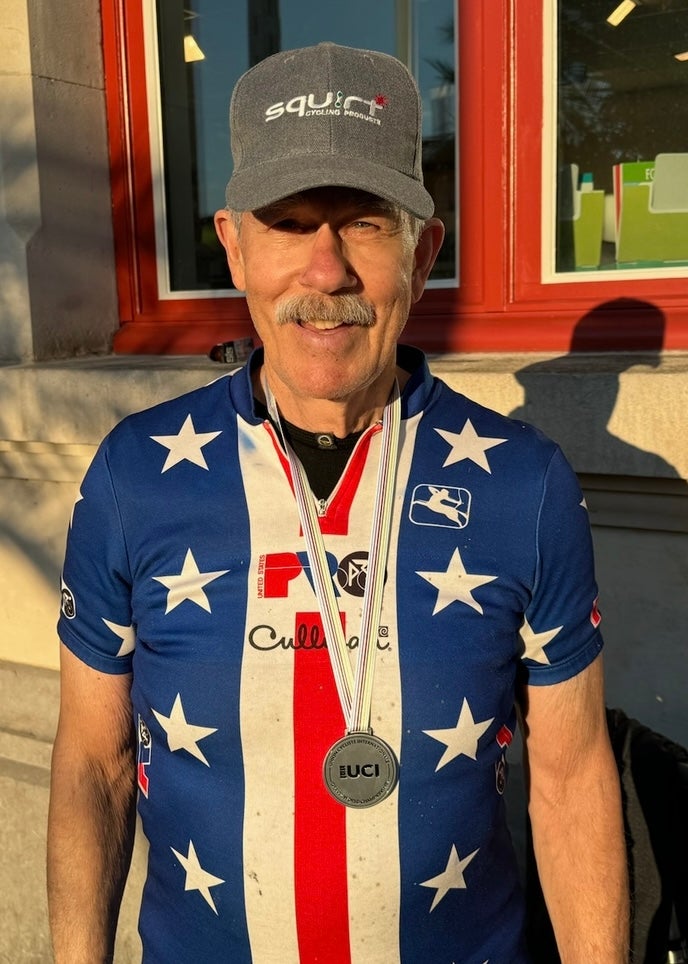
While pinning my race number on the USA jersey in our hotel room the night before, I get a little choked up when I tell Ian, “The last time I pinned a number on this jersey, you weren’t even one year old, watching me at the Masters World Mountain Bike World’s in Quebec, Canada.”
ADVERTISEMENT
I got a bronze medal there and had Ian in my arms on the podium—the officials put the medal around his neck, a very proud moment.
Somehow, I got it stuck in my head that Roger and I would start at the back of the 65+ to 79-year-old men, and I could see several older Belgian riders a few rows in from the back. I still had not met Roger and had only seen a newsprint picture of him. I approached a few of the older Belgians, but they acted like they did not speak English. Even though I yelled out Roger’s name a few times when I thought I had found him, no one turned around.
At this point, the Professional Elite Women, who I really wanted to see, were being sent off first with a couple thousand of us age groupers lined up in different roped-off areas. They started to get restless as we waited our turns to start at one-minute intervals.
ADVERTISEMENT
was near the back of our chute, still wondering where Roger was when they raised the rope and let our group move up about 50 feet. The surge for better positions began. This is when the adrenaline surge from 50 years of racing instincts kicks in, and I become 28-years-old fighting for position in the Central Park Spring Series once again.
My envisioning of starting out slow and conserving energy went right out the window as all hell broke loose. There was no holding back—only looking for openings as this bunch of wrinkled old men with small bellies went from 0 to 25 miles an hour in no time, while pulse rates skyrocketed, tires slipped on mud and cobbles, elbows were flying.
When Roger caught me around mile 21, I was disappointed because I knew then that he had taken his time and not burnt himself out. I was not sure how long he had been sitting on my wheel, but as he pulled up next to me, I said, “Roger, is that you?” He said yes, and I said to myself, ‘well now you have the race that you originally envisioned from the beginning.’
ADVERTISEMENT
Then the official moto driver came up and began speaking Flemish to Roger, and then he came up next to me on this narrow trail to tell me in English what he had told Roger: that we were over an hour behind, and we were officially out of the race. We would still be allowed to finish, but the roads ahead might be open to traffic and we were on our own. Once we both acknowledged what he had told us, he sped off up the trail, leaving us alone.
We didn’t have to look at each other—we both knew we were going to finish the remaining 25 miles regardless. Roger was a hometown hero and wearing the Belgian national jersey; there was not a chance in hell of him not finishing. Later, he would tell me that friends and spectators were telling him that I was up ahead of him, and he was surprised to catch me, but he also knew that I looked a little tired at the time.
The last 20 kilometers never let up on the uphills, the cobble sections, or the dark-shadowed farm roads with steep wheel-worn ruts. I had to get off and walk a few sections because I was too shaky, and the drop-off on either side of these dirt roads is so deep—falling would be treacherous.
ADVERTISEMENT
With 10 km to go, I recognized the roads and trails from my ride earlier in the week, but now I was being passed by elite amateur riders who were flying through this finishing loop. At this point, I was so weak I could hardly unwrap my last energy bar.
The best way to get over the cobbles or rough dirt sections is to get the speed up in a big enough gear so that you smooth out the bumps. Coming across these cobbled sections in the middle of a field on a double-tracked dirt road without speed or warning made absorbing the bumps hard on your whole body. But I knew this last cobbled hill was coming, and I had time to get up a little speed to find the smoother line and stay seated while keeping the speed all the way to the top. Then one more painful hump onto a dirt path where I got passed by two women. I knew the finish line was close, so I came back around them as we cruised through the expo and outdoor bar section and onto the wide boulevard for the finish.
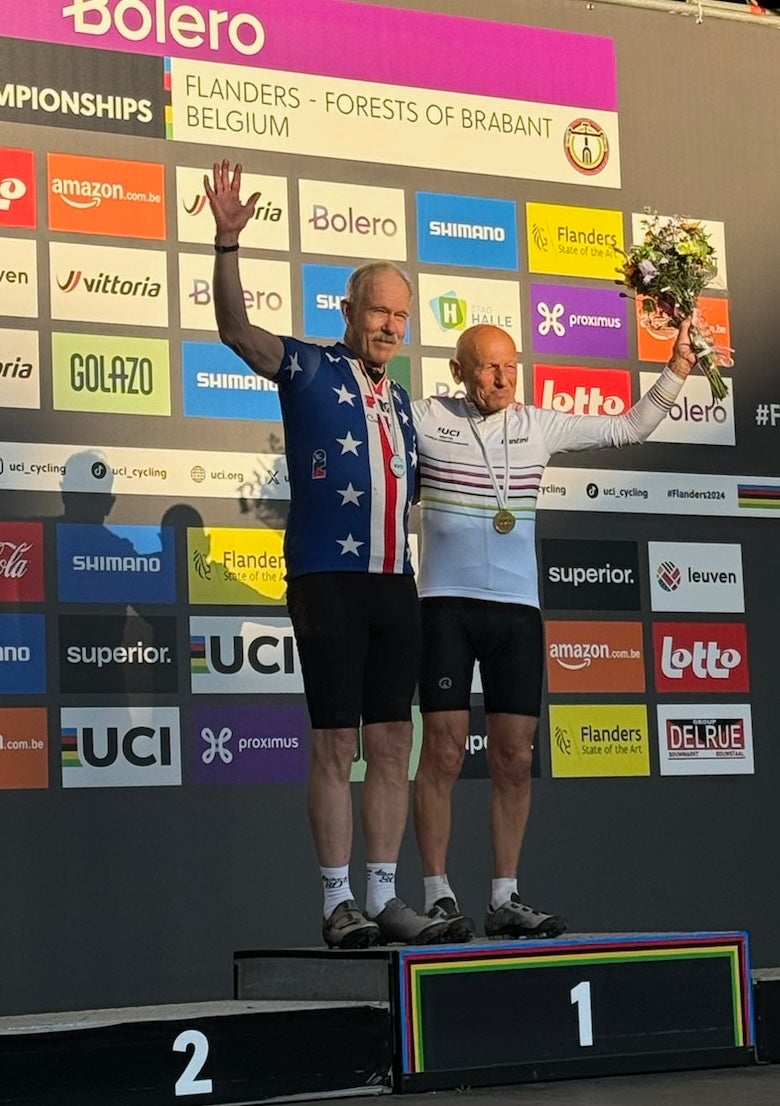
This was no time or place for disappointment. At 80-years-old, I had taken everything that Flanders had thrown at me, and I finished a World Championships in Belgium.
ADVERTISEMENT
As I heard Ian’s voice cracking and yelling, “Go Dad,” that was it for me. He was proud of his old man and wasted no time in telling me so as I climbed off my bike surrounded by my Irish crew and son.
Getting whisked off to the podium by the officials, shaking hands with Roger, and being happy it was over, I had a hard time controlling my emotions, with the past year of support and dedication flashing through my mind.
Although I was not the winner, I knew it was a great moment, realizing that my son was in the audience taking photos while I was on this huge stage looking out on a magnificent City Centrum. An immense sense of joy and relief came over me.
This story has been edited for brevity. Read the unabridged version at Humphreys’ website therealbikeguy.com.