Published February 14, 2022 11:39PM
Cameron Meyer and his ride out of carpal tunnel surgery
Aussie looking to rebound from a season lost to hand surgeries and COVID complications: ‘Wasn’t my favorite year, 2021.’
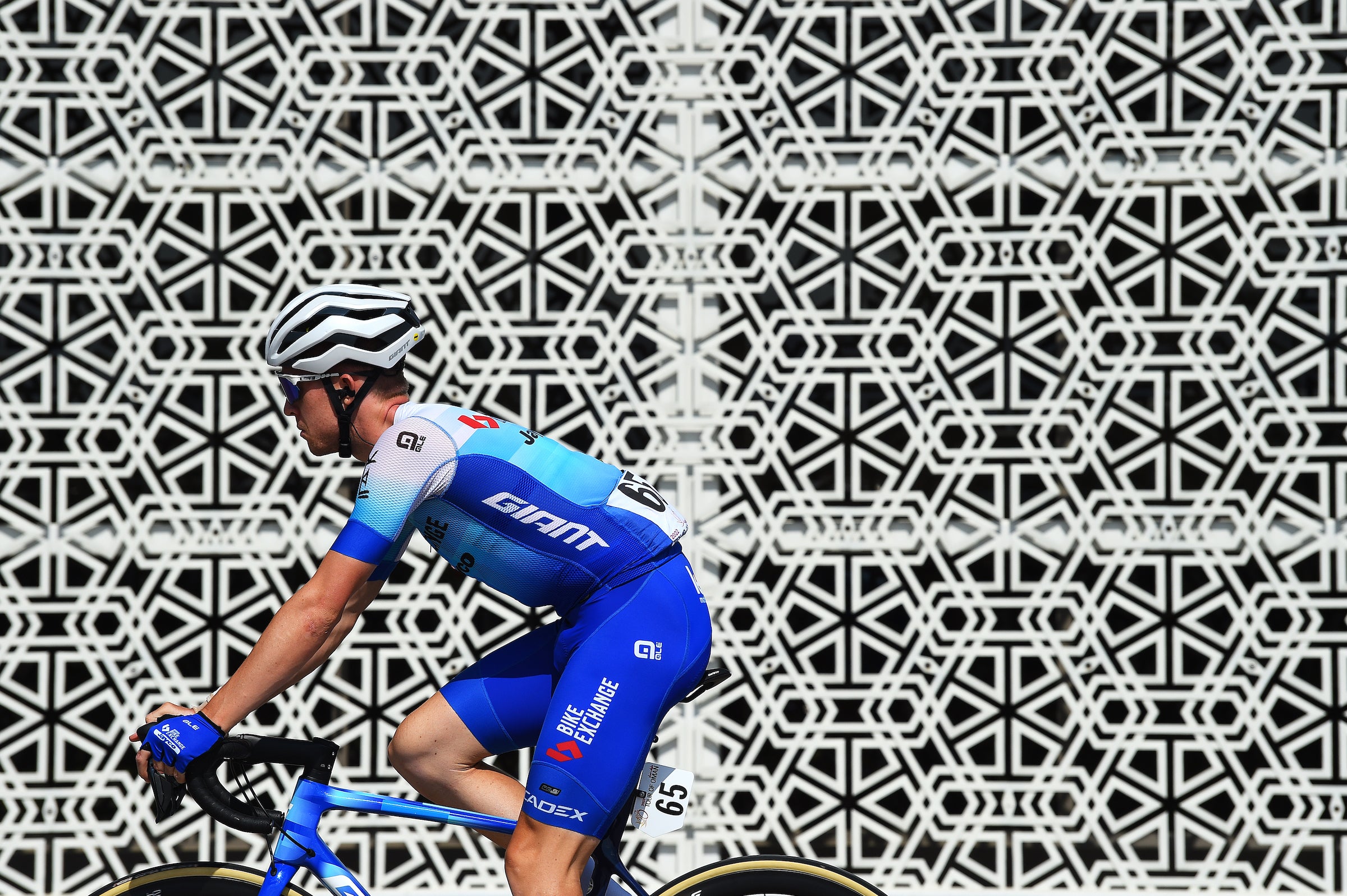
Shortly after losing his father to brain cancer last year Cameron Meyer was forced to put his preparations for the 2022 season on hold when doctors discovered an aneurism in his hand.
The Australian had surgery in November and for six weeks, on the back of an immeasurably difficult loss, couldn’t grab a handlebar.
“Wasn’t my favorite year, 2021. It was pretty tough,” Meyer said at the Tour of Oman.
The Australian now has a long, delicate scar down the center of his still slightly swollen palm and it goes up into his wrist.
“I had an aneurism in my hand. My artery got cut out and then they had to realign the nerves, so I had carpal tunnel surgery as well. It put me out for a while. It was extensive,” Meyer said.
“You forget how much as a bike rider you need your hands, and it’s not just about your legs.”
ADVERTISEMENT
The 34-year-old for the first half of this season is looking to get back into the rhythm of competition, with week-long stage races up until June and then, hopefully, a crack at the Vuelta a España to get a grand tour in his legs. In Oman, he shared his experience with a young BikeExchange-Jayco line-up and called the shots on the road to aid teammate Kaden Groves, who has been consistent in the sprints, finishing third to Fernando Gaviria on stage one, and second to Mark Cavendish on stage two.
Also read: Groves upbeat on BikeExchange-Jayco team cohesion in Oman
It was a long, slow process after that, and the hits kept coming.
ADVERTISEMENT
Australia’s authoritarian border closures during the COVID-19 pandemic have stumped the rest of the world and it’s as controlling on the inside, with different states setting their own rules and regulations. Western Australia, where Meyer hails from, currently has the strictest entry measures.
Meyer was in Adelaide last year when the state, now colloquially known as the ‘Republic of Western Australia’ closed its borders, preventing him from returning home to be with his family for Christmas. He flew to Oman from South Australia.
“I was locked out of the ‘Republic of Western Australia’. I went to Adelaide in November, right at the end of November, start of December, and WA closed the borders so I couldn’t go back. I’ve been in Adelaide for the last two months,” he said.
Asked if the rules and regulations impacted his preparations for a new campaign the Olympian, speaking generally, said it was hit and miss.
ADVERTISEMENT
“If you become a close contact [of someone who tests positive to COVID-19] in Australia then you have to do the seven days isolation. Seven days wasn’t ideal in your preparation if you had to do it once or twice, and I knew a few athletes that did have to do it,” Meyer said.
“I – ‘touch wood’ – have been lucky and haven’t been a close contact of anyone in Australia, so I got some training in, but I’m coming back from injury anyway, so I was dealing with that as well as trying to dodge the COVID.”
Up until last month, Meyer hadn’t raced since the Giro d’Italia in May.
He was able to test his legs at the Australian national road championships and then the Festival of Cycling, a replacement event for the canceled Tour Down Under, before traveling to the Middle East.
In Oman, Meyer was helping to set the tempo at the front of the peloton, which included just fewer than 100 riders. His outlook for the season is hopeful, despite niggling injuries.
ADVERTISEMENT
“With carpal tunnel surgery, it can be months and months and months until you get rid of the all pain that can occur in your palm. [I’m] still nursing a few niggles through it, it’s still developing, still strengthening up, getting rid of that, but it’s manageable,” Meyer said.