Published April 5, 2021 08:52AM
Tour of Flanders: Paterberg plays a defining role in Annemiek van Vleuten victory
Dutchwoman winds back the years with second Flanders win in 10 years after brutal Paterberg attack.
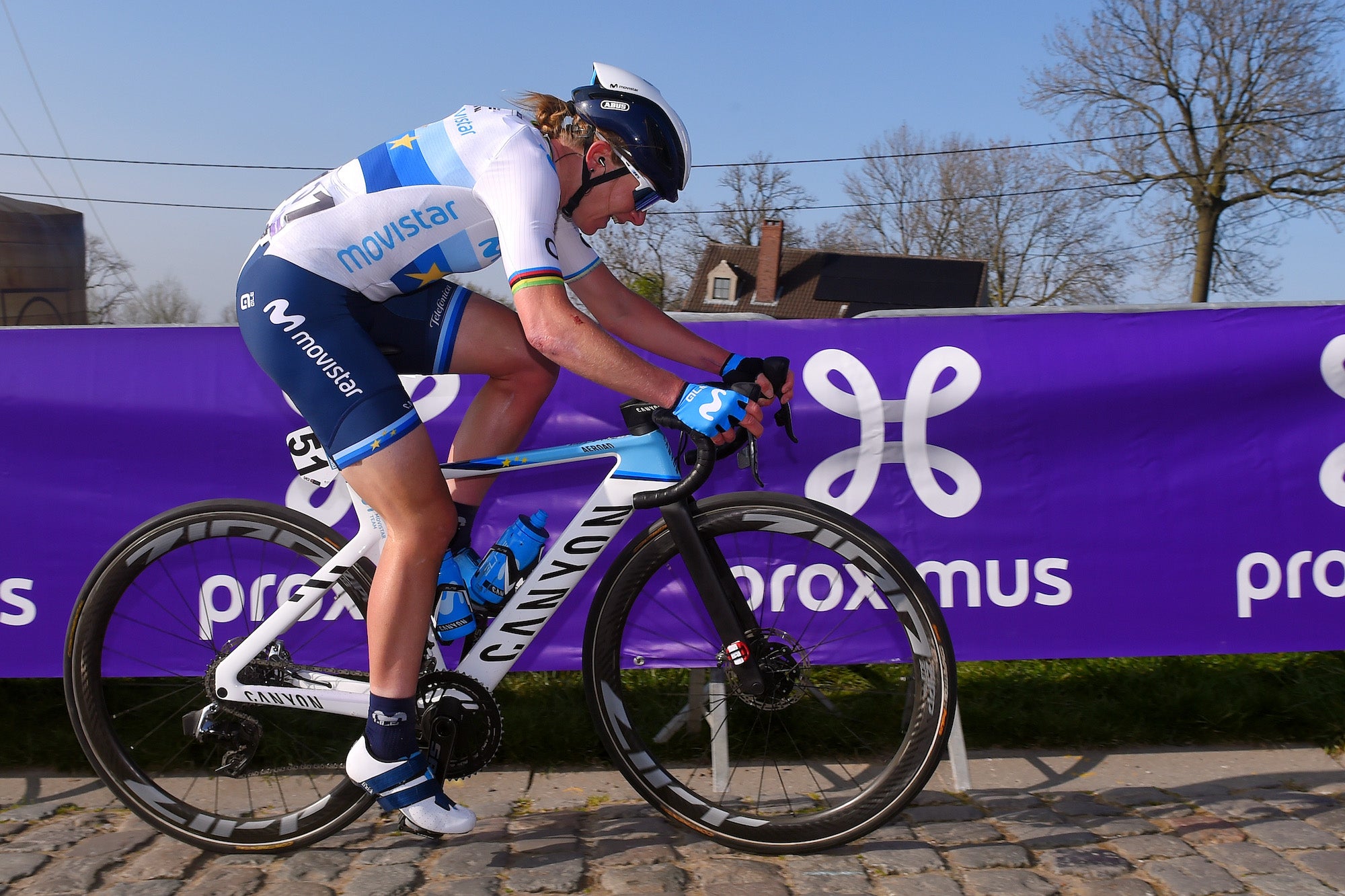
In landing victory Sunday in Oudenaarde, Annemiek van Vleuten became the first rider since Judith Arndt in 2012 to take a second Tour of Flanders title. The Dutch rider had a long wait to double her Flanders tally. Her first De Ronde win came 10 years ago, when the race still finished in Meerbeke during a breakthrough season.
Also read: Annemiek van Vleuten fends off chase in solo Flanders victory
Testing the waters
Van Vleuten was the first of the big guns to test the waters on the Kanarieberg inside the final 50 kilometers. She said later on that she had hoped to go clear, but the headwind on the climb meant there was little ground to be gained. However, her multiple charges on the asphalt climb proved a firm assessment of who might have the form to go with her when she finally made her move. Very few, if any, was the answer she got.
ADVERTISEMENT
With her curiosity sated and isolated from her teammates, van Vleuten bided her time. Trek-Segafredo, SD Worx and FDJ Nouvelle-Aquitaine Futuroscope were still flush with riders in the leading group and the Dutchwoman would likely have been swimming against the current had she gone so early. Playing the waiting game has its risks, but it would ultimately pay off for van Vleuten.
Riding the final Tour of Flanders of her career, Anna van der Breggen looked in mean form as she expertly whittled down the pack over the Kruisberg and the Oude Kwaremont. Unlike last year, there was no major attack from the SD Worx rider, but her efforts effectively eliminated the serious threats of Lizzie Deignan and Marianne Vos ahead of the final climb. Lotte Kopecky was gone, too, after a mechanical just before the Oude Kwaremont.
Power up the Paterberg
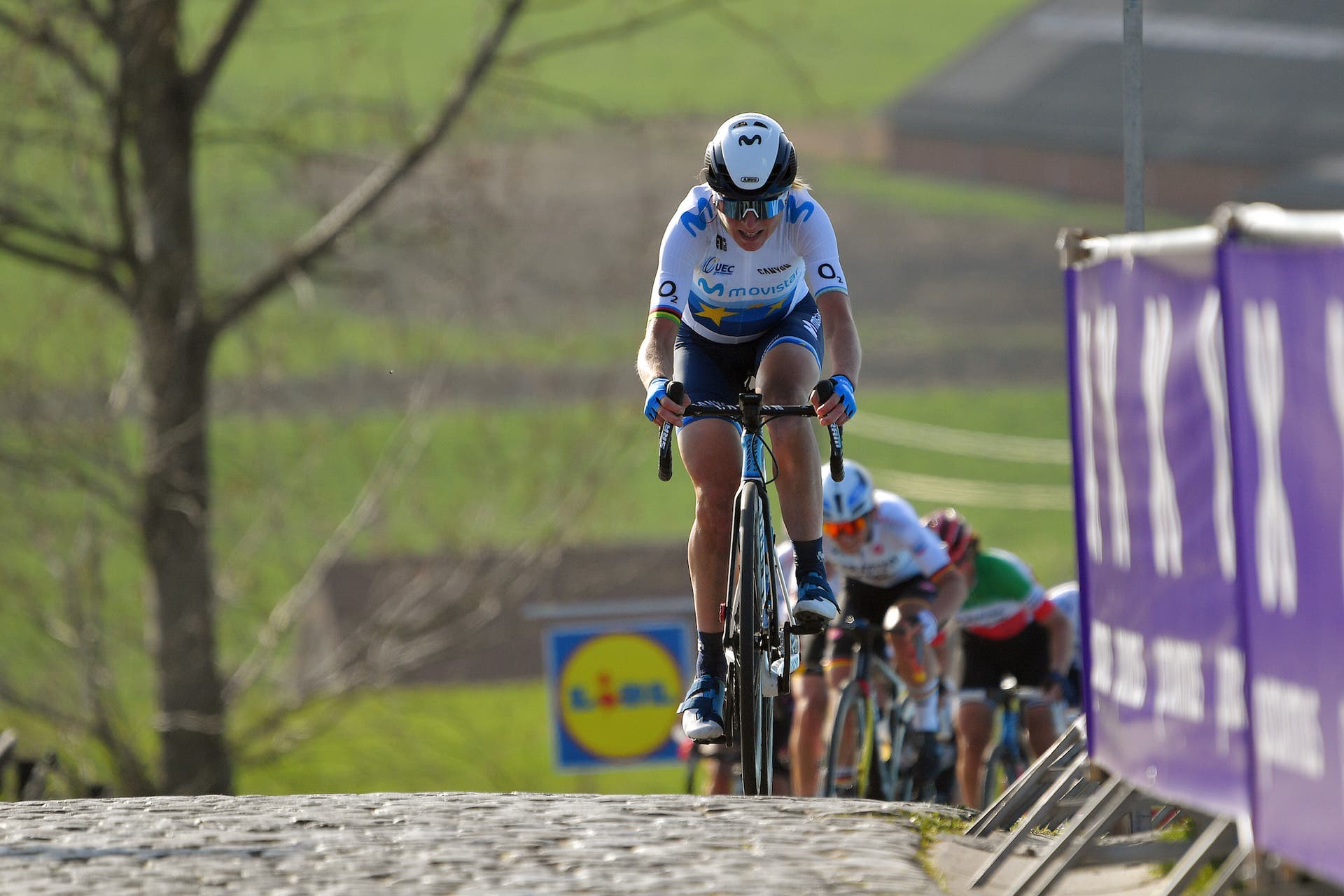
The Paterberg is particularly short but it takes no prisoners with its gradient of up to 20 percent.
ADVERTISEMENT
If we know one thing about van Vleuten, it is that once she has gone away it can be nearly impossible to bring her back, but the strength of the group behind meant that her victory was not a forgone conclusion. However, the lack of cohesion ensured that she would stay away.
Hesitation in the chase
Despite FDJ succeeding in getting two strong riders into the chasing group, the French squad did little work, and it was down to SD Worx to lead the charge. The group did eventually start rolling through and taking turns on the front, but the presence of Brennauer in the seven-rider chase meant that others were reluctant to bring the German to the line. She proved their point with a brutally fast sprint to take second place.
ADVERTISEMENT
That kind of hesitation is like gold-dust to an attacker, giving them just enough time to build their advantage. Van Vleuten’s margin was always quite small but, for a two-time world time trial champion, it was just enough. The Movistar rider was able to settle into a comfortable pace and hold it all the way to the line.
Van der Breggen and SD Worx are sure to be disappointed with how things panned out. Despite looking strong in the climbs prior to the Paterberg, the world champion was lacking her usual punch at the key moment. It may have been as a result of her recent altitude training camp, but van der Breggen will be hoping things improve in two weeks for the start of the Ardennes classics.
Also read: SD Worx dominates Strade Bianche
There will be several teams and riders poring over what went wrong in Flanders in the hope that they can rectify it for the upcoming races. Perhaps the biggest surprise of the day, however, was Niewiadoma’s wobble. The Polish rider has looked strong so far this season and appeared to be on the right course with her second at Dwars door Vlaanderen, but she imploded on the Oude Kwaremont.
ADVERTISEMENT
Stronger than ever
A decade in the making, van Vleuten’s second Tour of Flanders victory was not just a demonstration of how far she has come as a rider, but how much women’s racing has developed in the intervening years. Looking at the results from Sunday’s race, it would be easy to pass it off as another dominant win for van Vleuten but that would be to ignore just how hard it was for her to get away.
Prior to Sunday’s race, Cecilie Uttrup Ludwig told the press that she believed the overall strength of the women’s peloton was the strongest it has ever been. Thanks to new minimum wage standards in the WorldTour, increasing television sponsors and a growing number of high-level sponsors willing to invest in the women’s side of the sport, the strength and depth of talent in the peloton is rising with each passing year.
ADVERTISEMENT