Updated June 19, 2024 06:13AM
First Look: The 2025 Liv Langma Is Lighter, Stiffer & More Aero Than Ever Before
The 2025 Liv Langma frame in the top-flight Advanced SL model weighs a claimed 667 grams, thanks to a new manufacturing process that molds the front triangle as one piece.
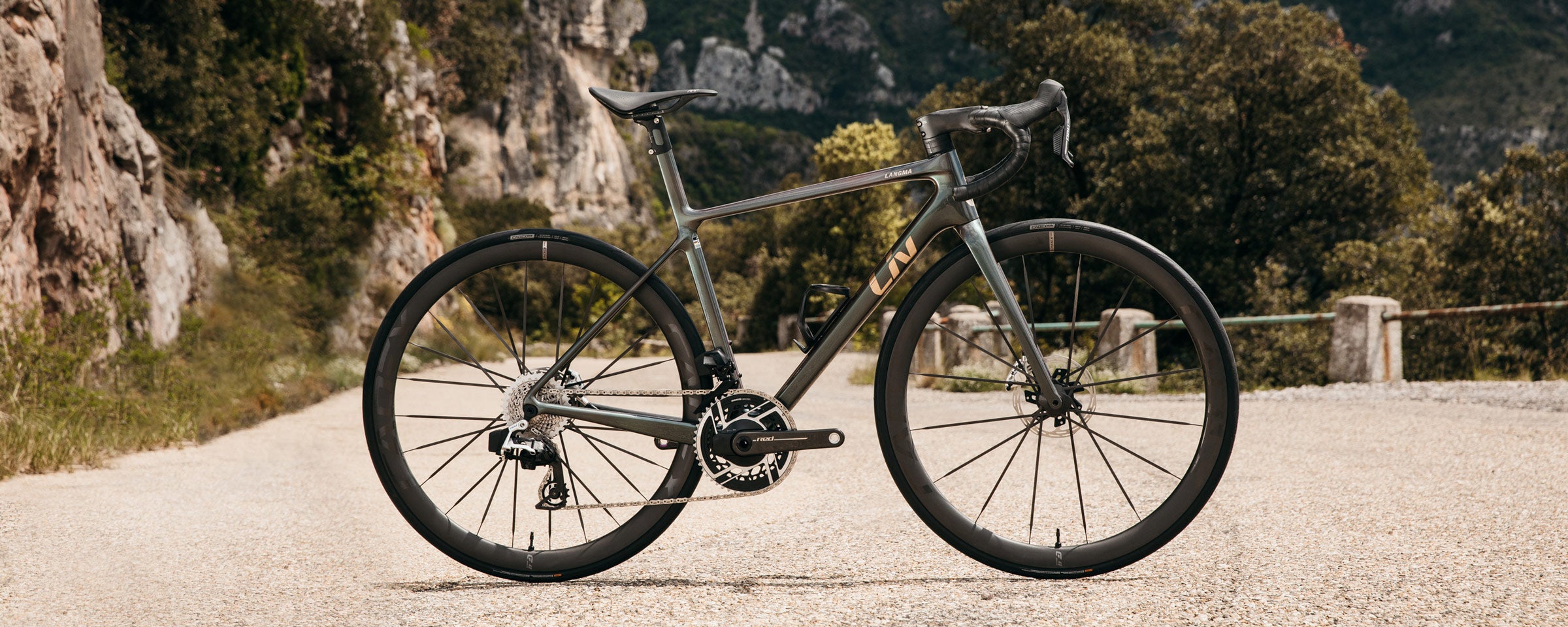
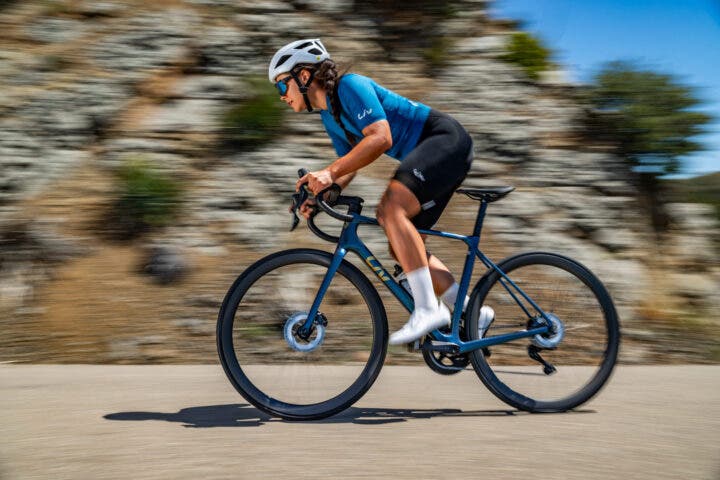
Liv Cycling has announced the 2025 Langma performance road bike, due to become the official bike of the WorldTeam Liv AlUla Jayco for the looming Giro d’Italia Women and the Tour de France Femmes avec Zwift. Offered in 11 models, the redesigned Langma brings a women’s specific geometry to a road bike frame that is lighter, and more aerodynamically efficient than ever before.
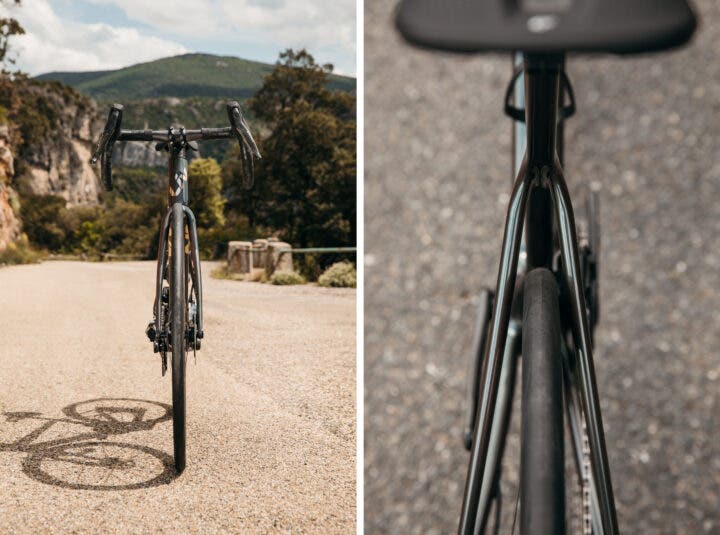
Truncated, elliptical tube shapes, a wide bottom bracket shell and downtube, and a new integrated seatpost design promise to deliver the most efficient drag-beating, road-smoothing Langma to date.
Quick Hits: 10 Things to Know About the new Liv Langma
- Available in Advanced SL, Advanced Pro and Advanced models
- Advanced SL models get the Variant Integrated Seatpost for extra road-smoothing compliance
- More tire clearance than before, now at 33mm
- Fully Integrated Internal Cable Routing on all models
- New truncated elliptical tube shapes developed using computational fluid dynamics and wind tunnel testing improve aerodynamic efficiency
- Lighter Advanced SL Composite Fork
- Available in XXS-L frame sizes
- Claimed Weight: 667 grams (raw medium frame)
- Complete bike weight: TBC
- Price: $12,500 USD (Advanced SL 0)
- liv-cycling.com
Before we dig into the details, it’s pertinent to gain a better understanding of the Liv Cycling range of road bikes. There are just three to speak of: the Avail, the EnviLiv, and the Langma. The latter, discussed in detail here, is unashamedly Liv Cycling’s absolute best performance road bike they can make, designed to give their ProTour riders the edge when pushing for the W. It is the lightest, stiffest, and most aero-efficient of the two, and the most expensive.
The Avail is better described as an endurance road bike, and with clearance for 38mm tires, perhaps even as an all-road bike. It’s heavier, but is said to deliver a more comfortable ride position that can be sustained for longer periods of time. You can check out Alvin’s First Look at the new Avail here. Finally, the EnviLiv is their true aero-road bike, wind-tunnel optimized for all-out sprint efficiency.
Without further ado, let’s take a closer look at the updates Liv are brining to their performance road bike this season.
ADVERTISEMENT
2025 Liv Langma Road Bike Updates
We’ll kick things off with the top-flight Advanced SL, the one that sees the most technological advances. The Advanced SL is the lightest carbon frame technology Liv use, and this year they’ve managed to make it lighter than ever before without sacrificing strength and stiffness qualities.

It’s a new manufacturing process that permits that. While the carbon front triangle of the predecessor was made in three individual pieces, the 2025 Langma frame is a one-piece mold. Giant’s top-flight road frames are made using the very same process, a deep-dive on which can be read in Alvin’s first ride review of the new TCR Advanced SL.
Meanwhile, the slightly heavier front triangles of the Advanced Pro and Advanced models are still manufactured in three distinct pieces, and then molded together afterward; Liv call that a Modified Monocoque.
ADVERTISEMENT
The Advanced SL carbon frames also benefit from a resin that includes Carbon Nanotube Technology (CNT). This is a microscopic polymer that Liv says acts like miniature buttresses to strengthen the layers of composite. As a result of CNT use, the Advanced SL carbon frames are 14 percent more impact resistant than those made without a CNT-containing resin.
Weight
Methods aside, it’s the result we’re most interested in. How much lighter is the new Langma?
Exactly 123.03 grams, according to Liv. That’s a direct comparison of the 2021 Liv Langma Advanced SL with the 2025 Langma Advanced SL launched today. Claimed weight for a size medium painted and decaled production frame, with a painted production fork (uncut), with integrated seat post and clamp/hardware, front and rear derailleur hanger and clamps, expander, top cap, headset and spacers, as well as all production hardware (water bottle bolts, etc.), is an astonishing 1.33 kgs.

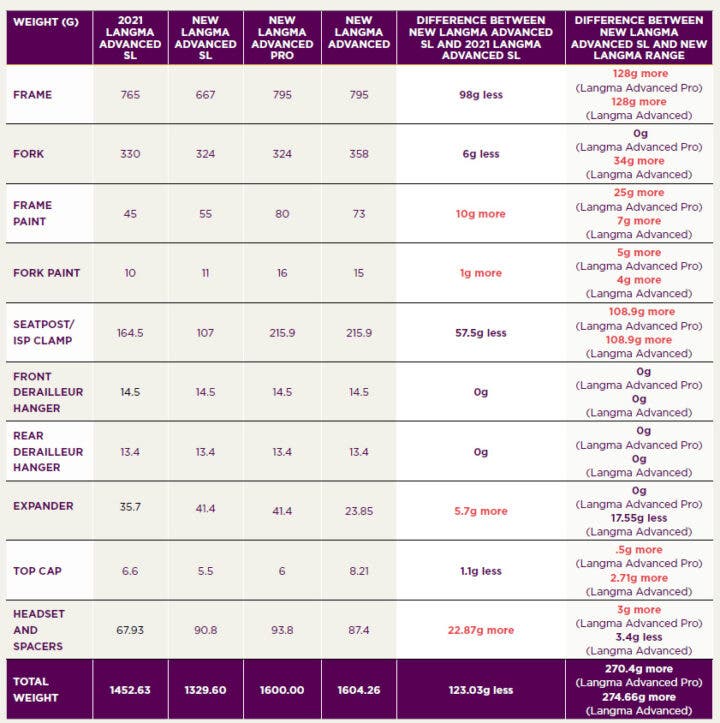
Not forgotten are the Langma Advanced Pro and Langma Advanced framesets, which are themselves 44g and 75g lighter than their respective predecessors.
ADVERTISEMENT
Aero-Performance
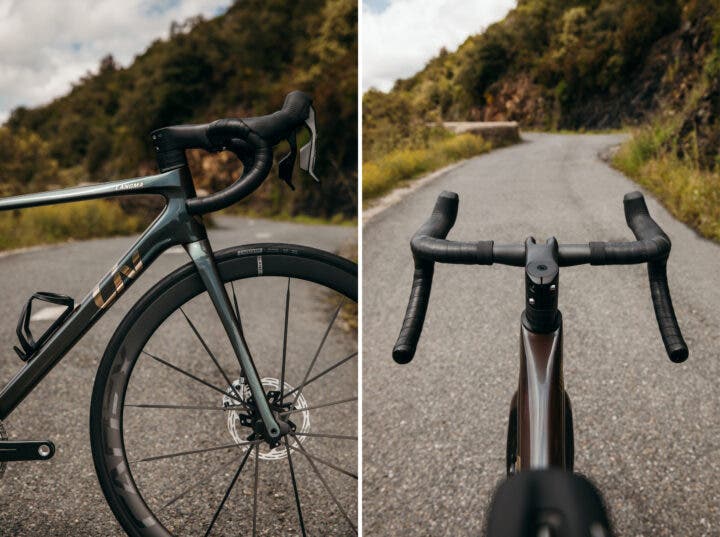
While the 2025 Langma isn’t starkly different to its predecessor, subtle changes to the tubeset shapes have delivered a frame that is even more aero efficient. While the previous generation Langma also made use of the truncated ellipse tubing, the 2025 frame takes it a step further, refining tube shapes using computational fluid dynamics and extensive wind-tunnel testing.
You’ll notice new airfoil sections, most notably around the headtube, that are said to lower drag more effectively across a wider range of angles compared to traditional teardrop-shaped frames.
ADVERTISEMENT
All that said, the extra efforts in developing the frame shape yielded very modest gains in aero efficiency as compared to the differences arising from alternate componentry. A mere 1.5 W saving was achieved with the new frameset shape, while at the complete bike level, the saving is a far more appreciable 12.57 W.
Contributing to the aero gains is the move to fully integrated cable routing, right across the lineup. It’s not everyone’s cup of tea, but if ever there was a case to be made for it, it’s on high-performance road bikes. It looks ultra-neat, and ultra-fast, even if the gains are, ultimately, marginal.
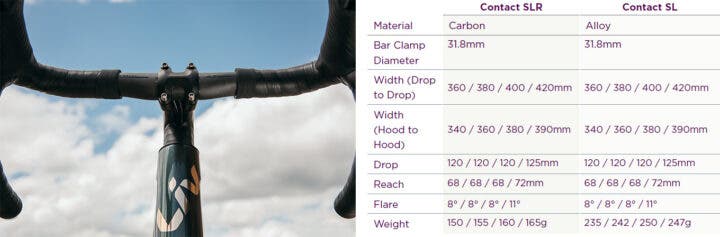
Model-dependent, the Langma gets the Contact SL or Contact SLR bar, the former being by far the lightest at just 150 grams in the 360mm version.
ADVERTISEMENT
Stiffness
The pedaling stiffness-to-weight ratio of the 2025 Liv Langma is 49.26, representing a not-to-be-sniffed-at-improvement of over 11-percent over the outgoing Langma of 2021. That value pertains to the top-end Advanced SL model, of course. Liv tell us that most of the gains in stiffness come from modified sections of the head tube, down tube, and bottom bracket area, and that the increased frame stiffness results in better power transmission, allowing the rider to reach and maintain higher speeds with less effort.
In regard to pedaling stiffness, the Advanced SL frame is over 20-percent stiffer than the Langma Advanced Pro, and almost 24-percent stiffer than the Langma Advanced.
Geometry
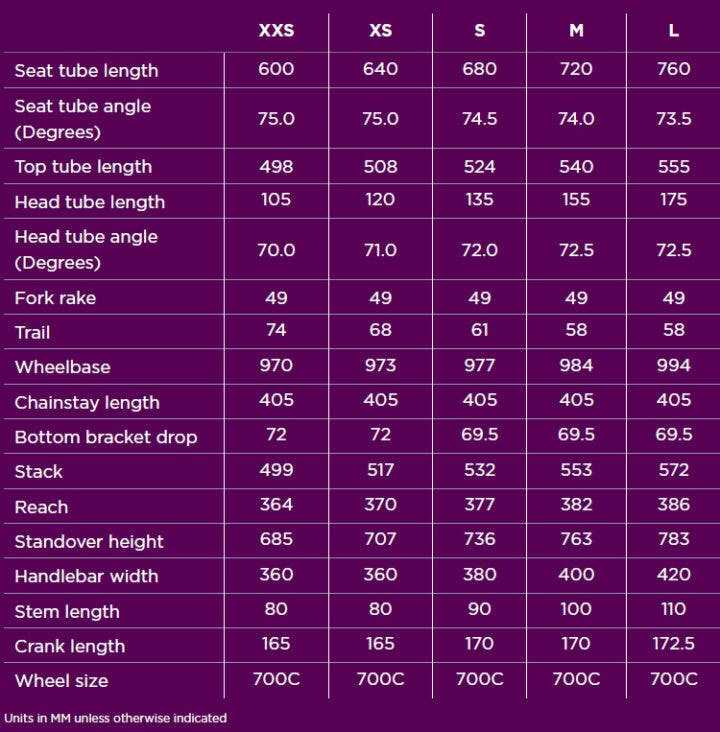
Pricing & Availability
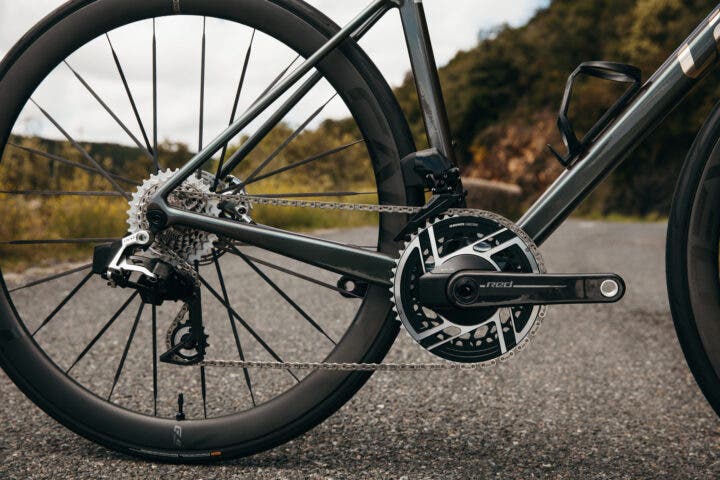
Of the two Advanced SL models, only the Advanced SL 0 will be available in the US. $12,500 USD fetches you the Advanced SL composite frameset with integrated seat post, the CADEX MAX 40 Wheel System with aero carbon spokes, CADEX Race GC tires (28mm), a 12-speed SRAM Red AXS group, and the lighter Contact SLR handlebar with the AeroLight stem.
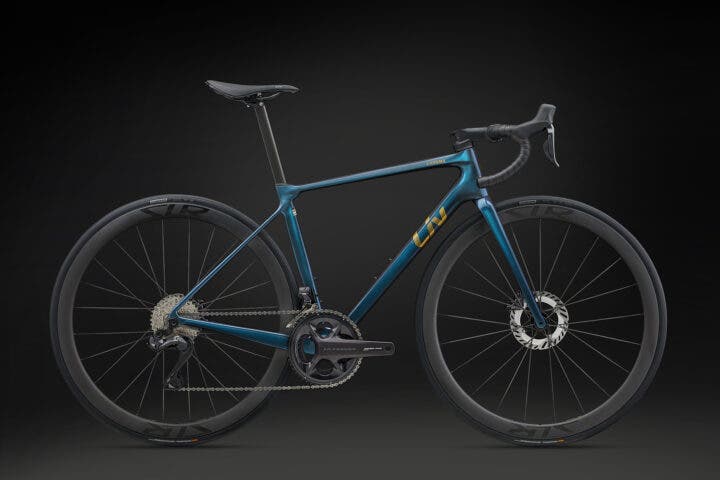
Also available to the US market is the Advanced Pro 0 (Pro Compact) which goes for $6,500, the Advanced 0 priced at $4,700, and the Advanced 2 (Pro Compact) at $3,200. The complete specs can be found on the Liv Cycling website.
ADVERTISEMENT