Published July 27, 2023 11:29AM
Cadex Amp saddle review: A comfortable 129 gram saddle
The Amp offer excellent comfort and superior build quality, but it comes at a price.

(Photo: Alvin Holbrook/VELO)
Saddles are about as personal as they come. Your favorite saddle likely won’t work for someone with a different build, which makes it almost impossible to prescribe just one saddle for everyone. Cadex found that to be the case with their one-and-only saddle, the Boost. That is until now, with a new option: the Cadex Amp saddle.
Cadex positions themselves in many ways as independent from their parent company, Giant. What they do take advantage of, however, is the ability to use the latest technologies to build products that they feel are without compromise. This often leads to oftentimes shocking pricing, but just about everything I’ve tried from the company has been nothing short of outstanding.
And now comes their latest addition, the Amp. Let me tell you, it’s really, really good.
It turns out not everyone can ride just one saddle
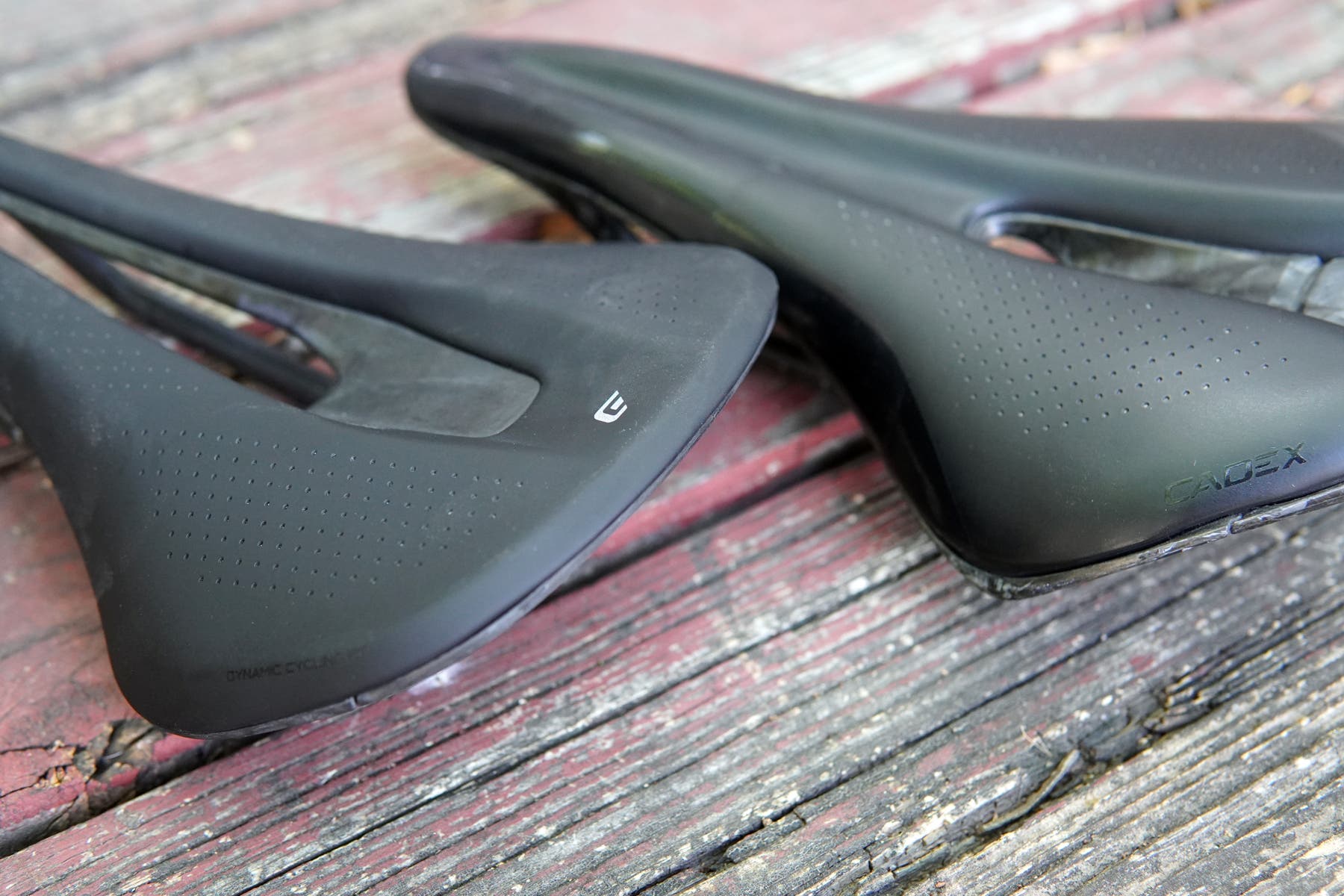
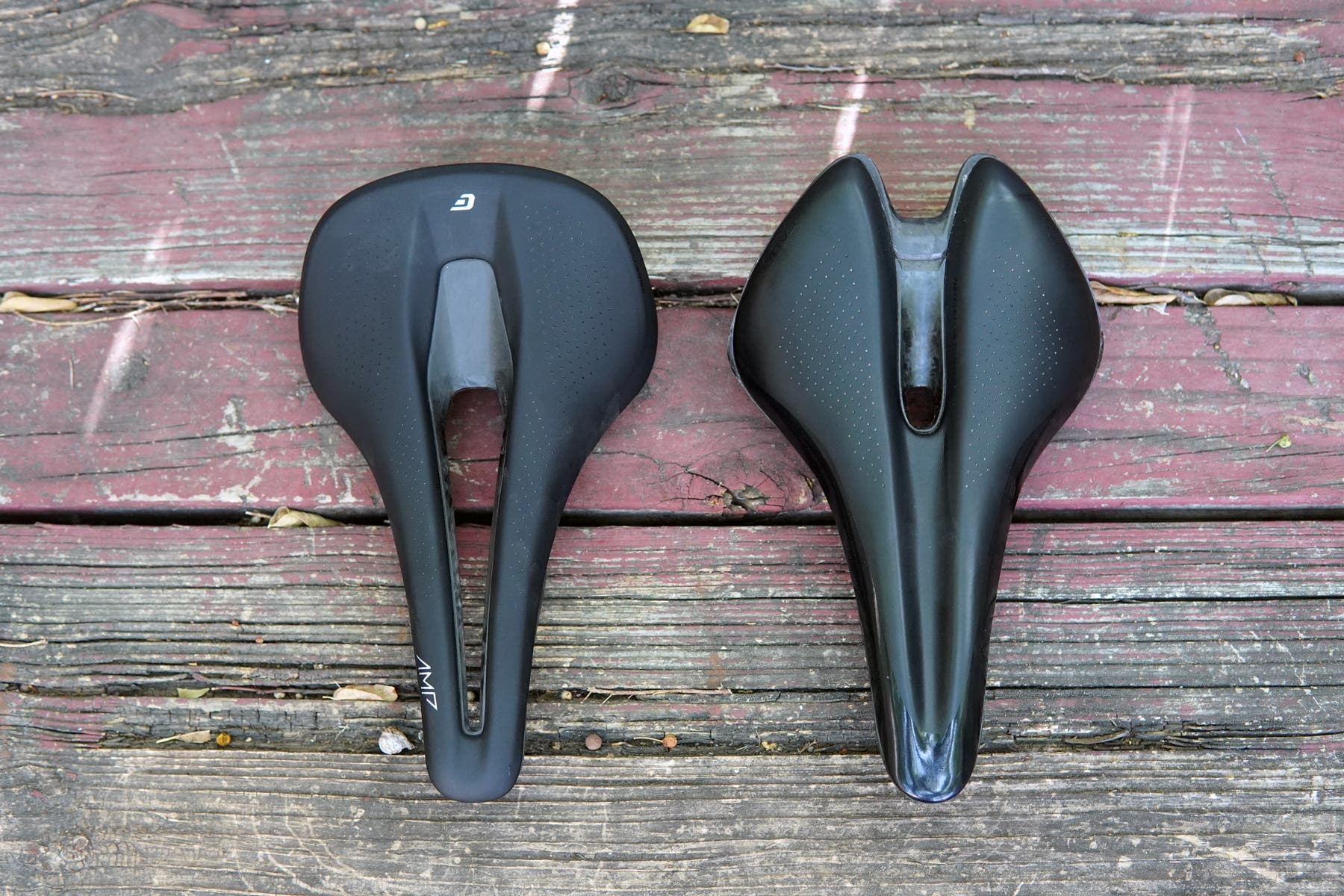
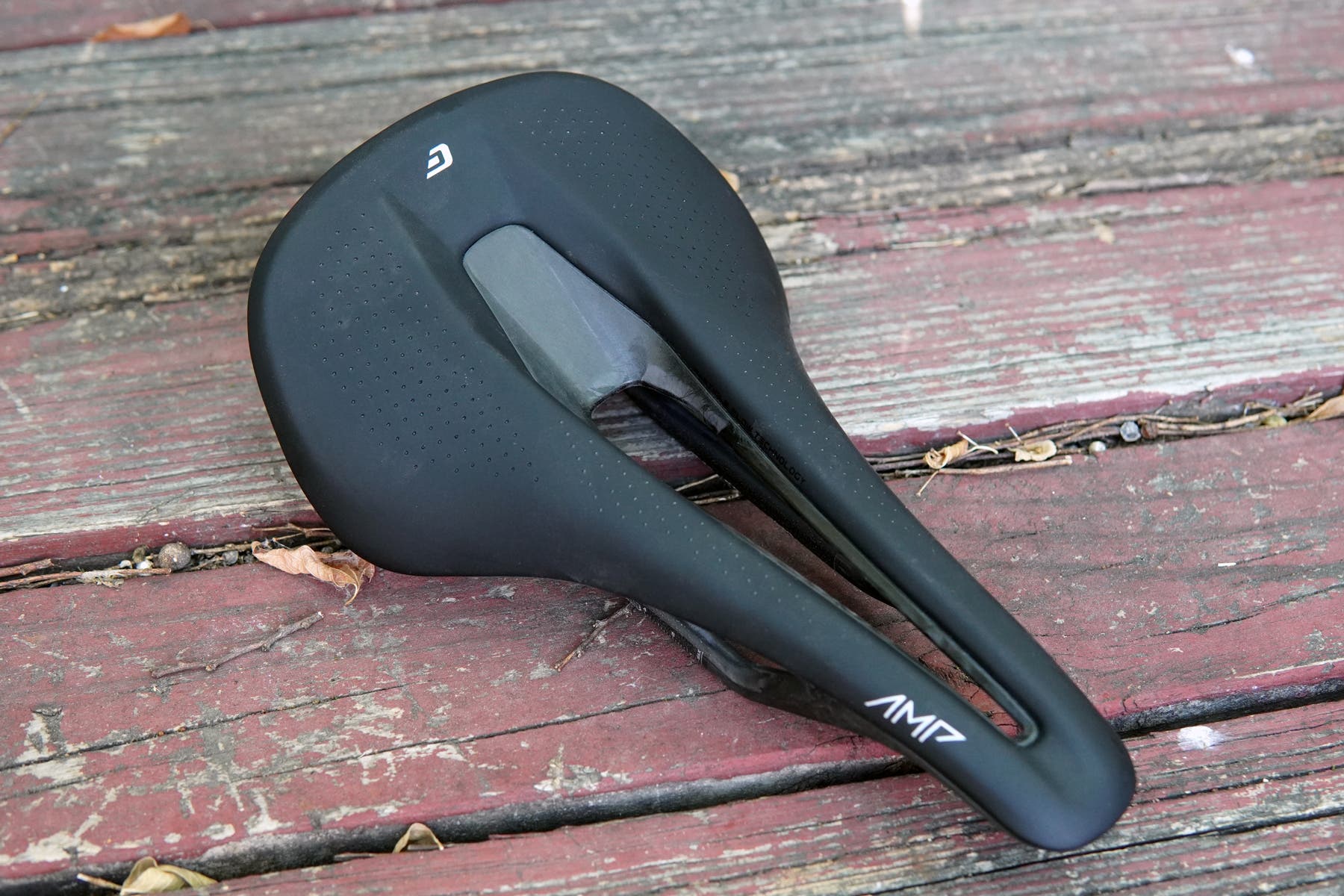
According to Cadex, many of their pro riders (Team Jayco-AlUla is a big one, riding Giant bikes and Cadex wheels) liked the Boost but wanted more obvious relief down the middle. The Amp does just that, with a massive central channel. It still maintains its membership in the short-nose saddle club at just 245 mm long.
Cadex only offers the Amp in just one width of 145 mm. While this width won’t work for everyone, it is narrower than the 149 mm-wide Boost saddle. That 145 mm width arrives gradually from the nose, allowing for some space to perch on the nose if you want to.
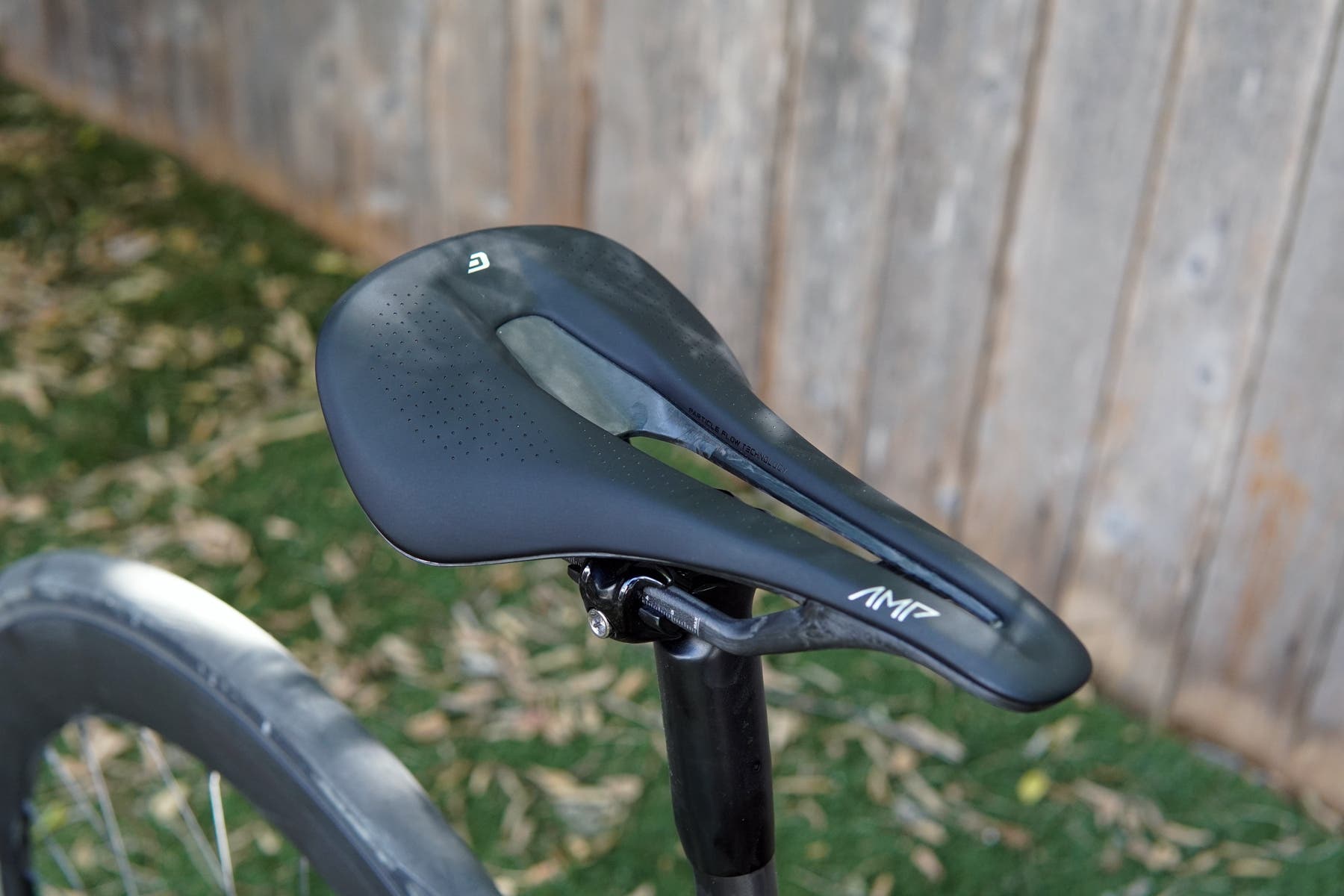
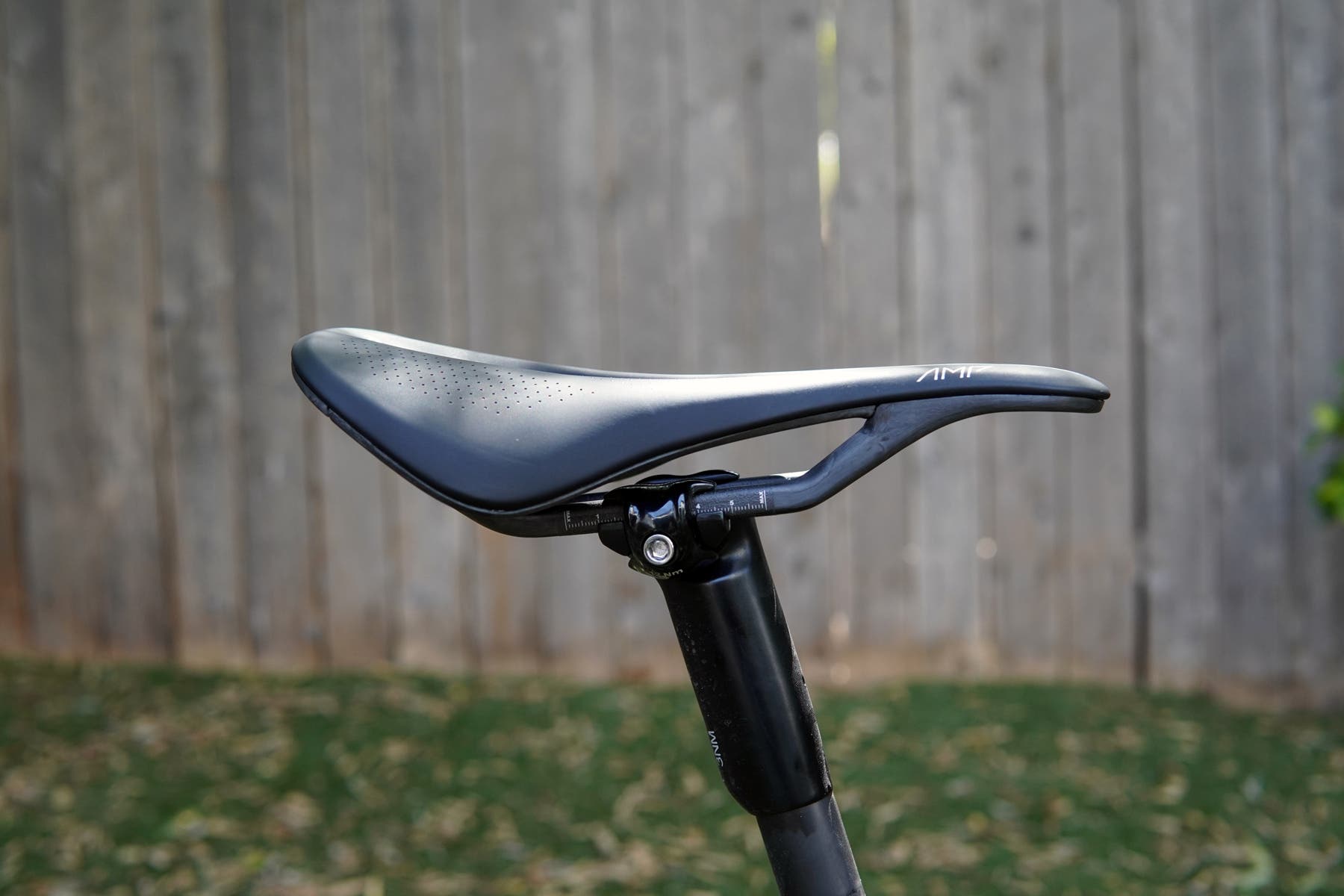
The Amp saddle is fairly flat front to back, with a strong ramp up toward the back. Side to side, however, the saddle angles down quite a bit from the generous central cutout. Its curvature isn’t quite as pronounced as something like a Specialized Power Arc, but it is curvier side-to-side than a PRO Stealth, Specialized Power, or Fizik Vento Argo saddle.
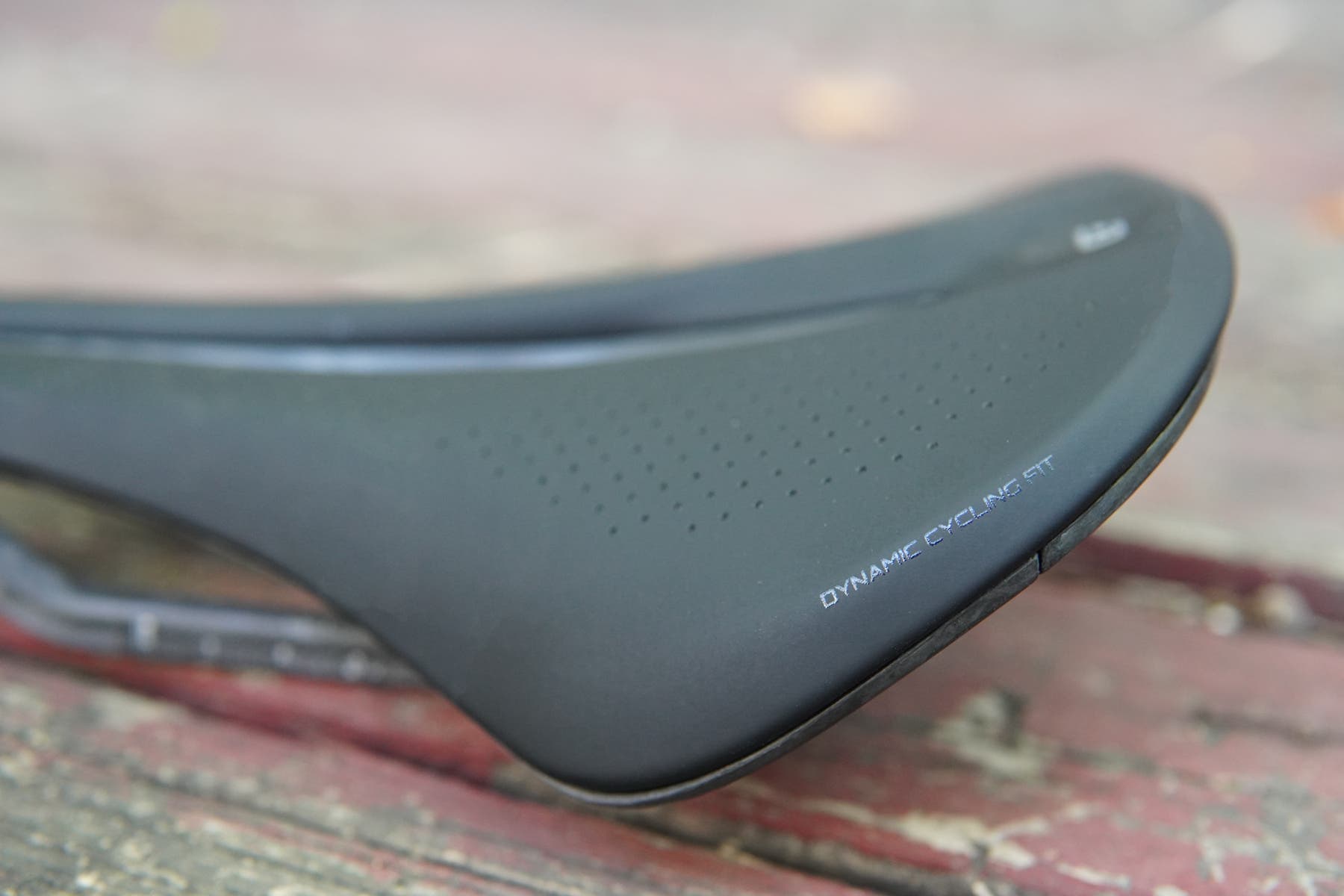
Cadex claims the Amp saddle weighs in at 129 grams, and mine weighed in on multiple scales at the same 129 grams. Much of that low weight comes from what they’re calling ‘Advanced Forge Composite Technology.’ The result of it is an intricately-detailed saddle rail that is integrated into the two-piece saddle construction.
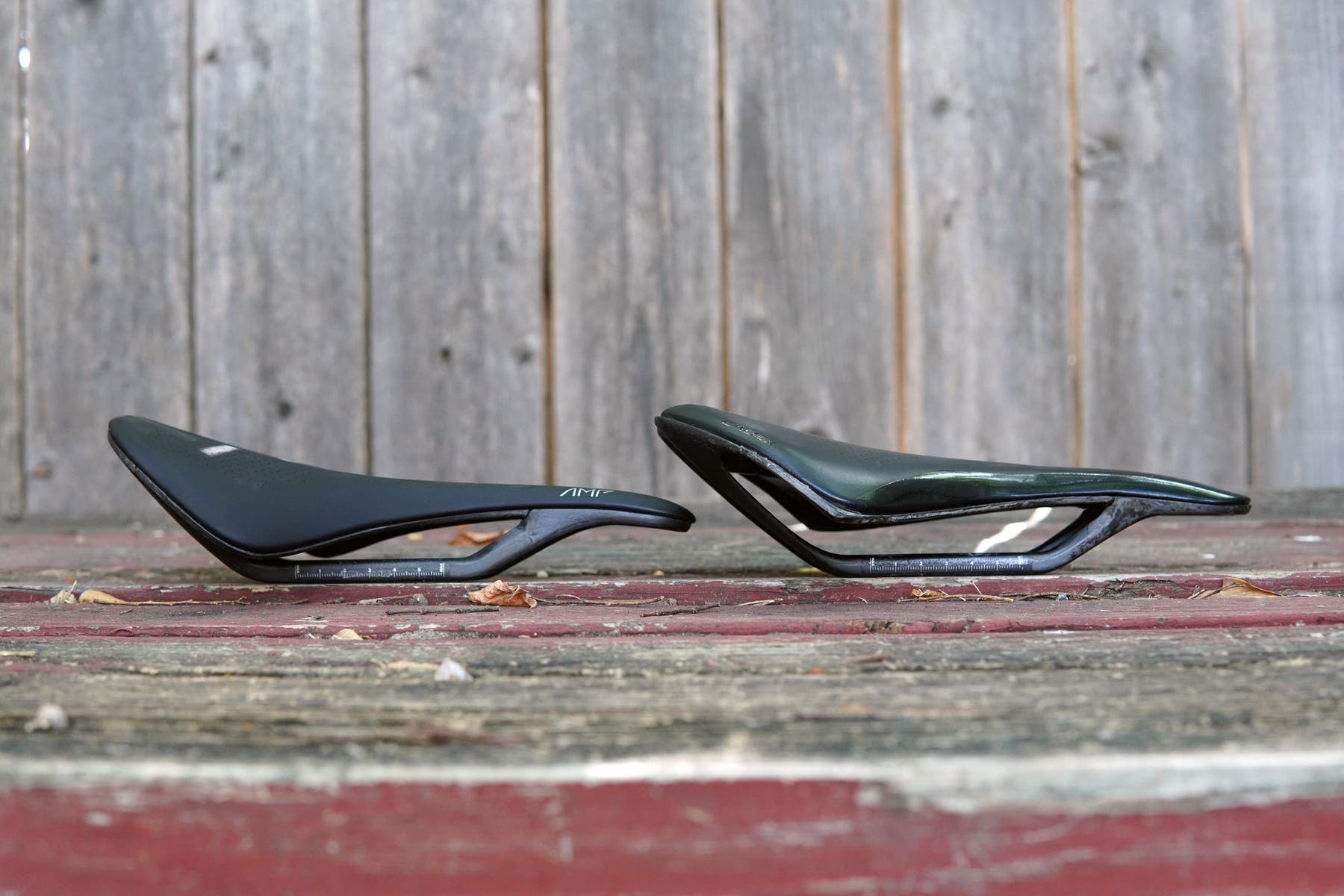
These rails essentially go from tip to tail, unlike most conventional saddle rails. According to Cadex, the rails connecting farther back than most other saddles should relieve pressure points, help dissipate road vibrations, and keep the saddle light.
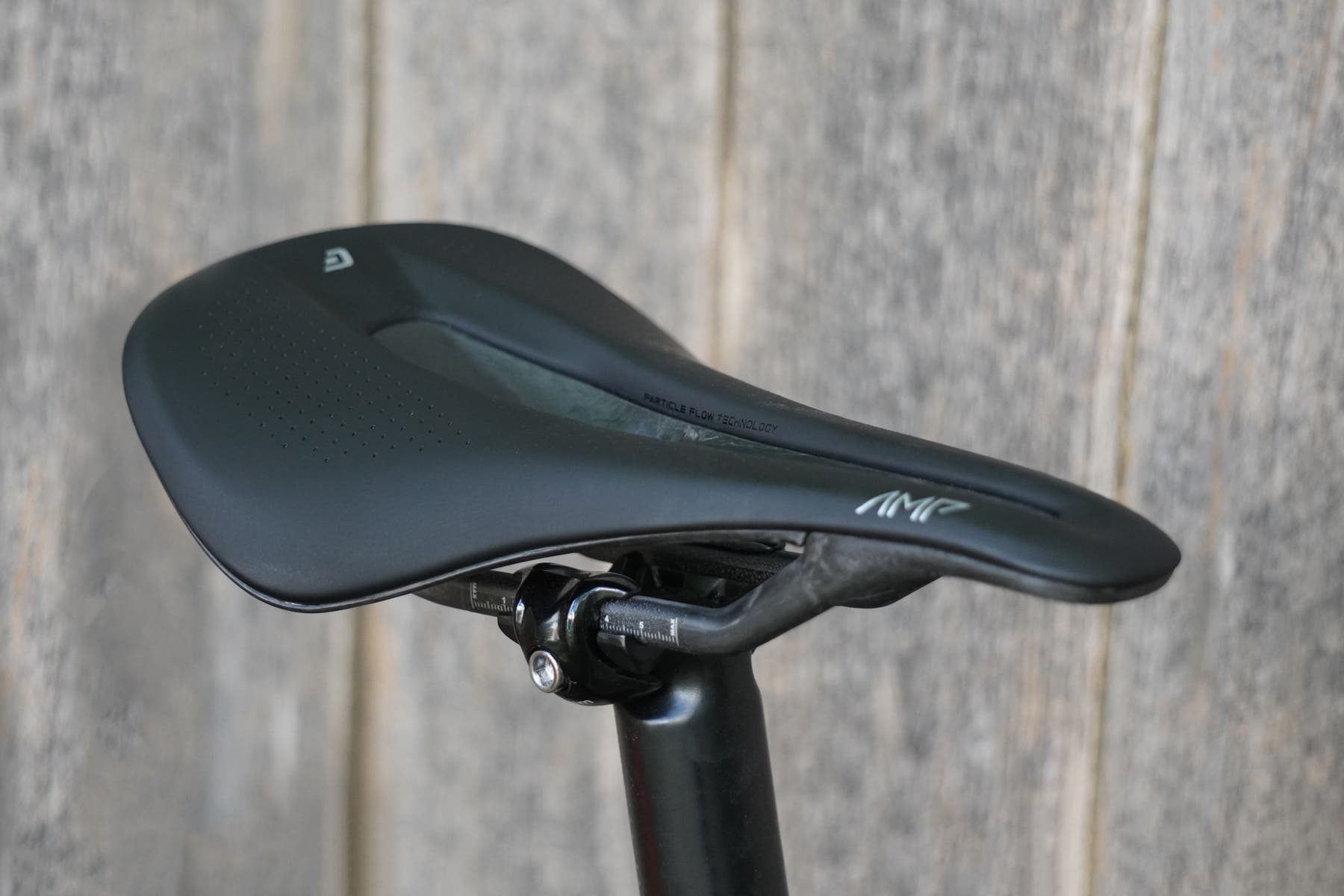
Atop the saddle is a combination of EVA foam and ‘free-flowing’ ETPU particles. The ETPU particles are positioned within pockets where your sit bones contact the saddle. Doing so is said to offer a more comfortable ride in a high-pressure area that will see the most wear. Elsewhere, the EVA foam is lightweight, durable, and should aid vibration damping.
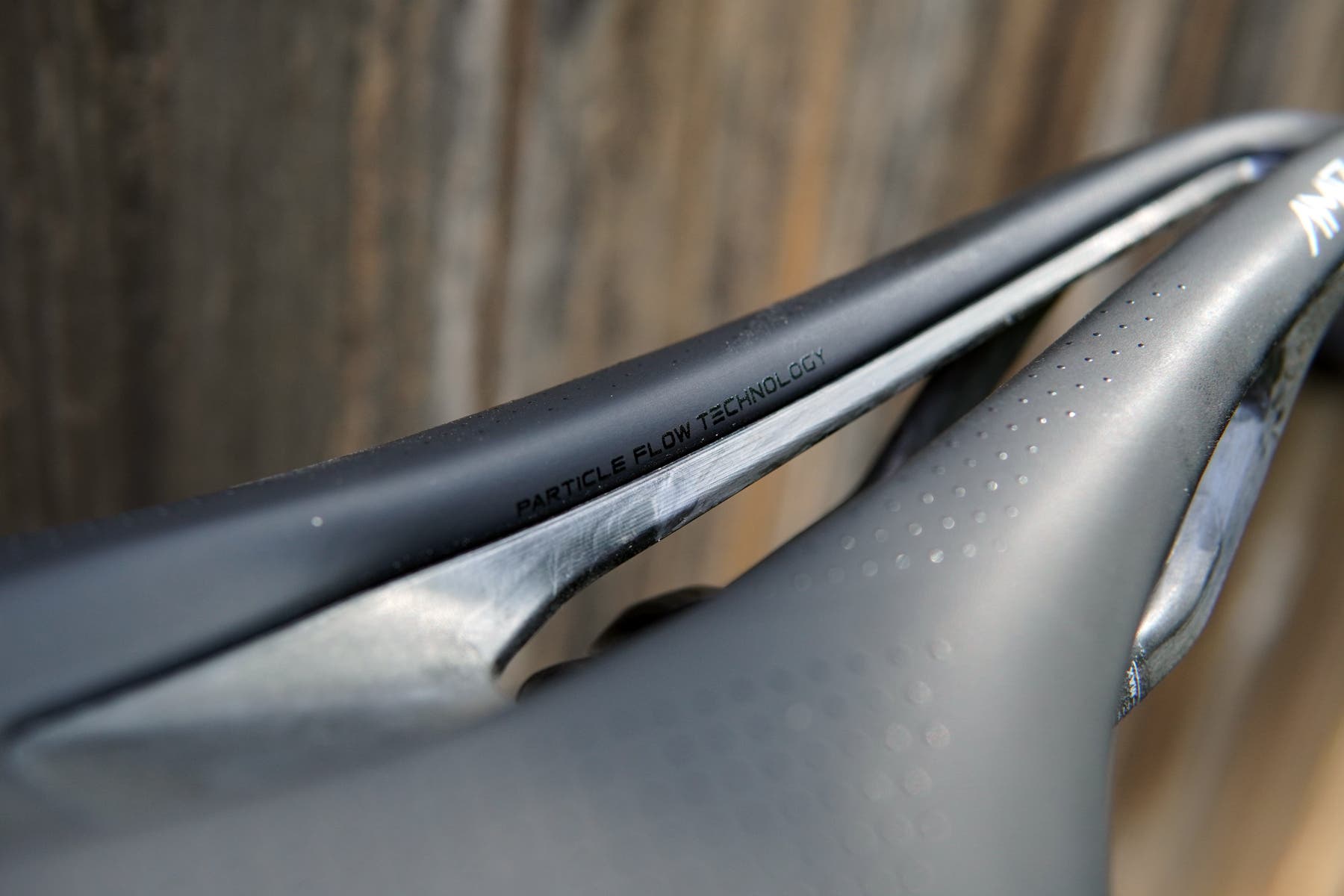
Looks aren’t everything, but I think the Amp looks sporty and on the cutting edge. The build quality is excellent overall, and the low weight paired with the sturdy construction results in something I think just seems special.
ADVERTISEMENT
Riding the Cadex Amp saddle
Before I get into my impressions, I have to give you all my saddle review spiel: saddle choice is highly personal. A saddle that your friends rave about won’t guarantee comfort, and the saddle you disliked previously might work great for you as your fit and fitness change.
My personal preference for saddles is toward curvier, more supportive shapes. The long-running Cadex Boost saddle is a good choice for me on the road, and I’ve been comfortable riding it all day without issues. I typically go for the Pro Stealth Offroad for gravel and trail messing about, but I’ve also come to enjoy other short-nose saddles, such as the recently-reviewed WTB Gravelier saddle.
Modern short-nose saddles have typically been a good choice for me, so long as the front of the saddle kicks up slightly to keep me better in place. I prefer a nose that is wider than the likes of something like a Specialized Power and closer to a Romin; the Romin gives me a better perch to hang out on as I move back and forth on the saddle to match the terrain.
Rather than leaving the nose area flat like most folks, I tilt it up ever so slightly. Measure the tilt from front to back, and the nose is still lower than the back, but perhaps less than Cadex planned from the start. Doing so keeps me in place when I want to be without the pressure of a long nose up front.
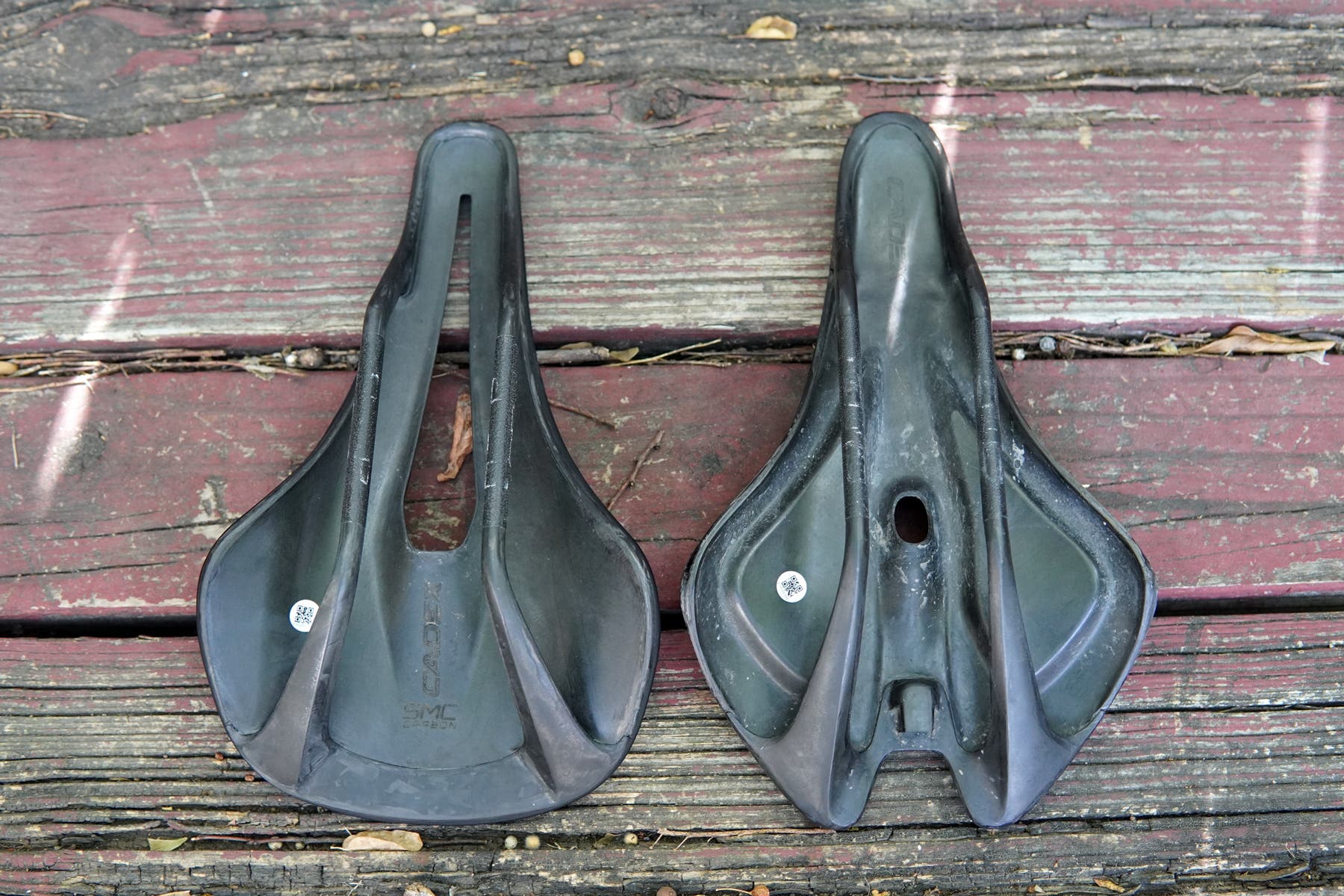
One of the marvels of the Boost saddle was the lack of hot spots that tend to come after hours in the saddle. So far, the Amp is the same. Ten-hour days in the saddle were about as comfortable as they’ll get.
There are three caveats with the Cadex Amp. The first is that like the Boost, the Amp saddle rewards precise placement. Tilt the nose just a bit too high or have it too far forward on the rails, and you’ll have a tough time with the saddle, but dial that in, and I found there to be hardly any issues riding across different hand positions.
The other caveat here is that this saddle is clearly for an aggressive riding position. The short length and quick upward sweep to the back of the saddle makes it tougher to comfortably sit up after a hard effort. Not a big deal for my riding position, but I wouldn’t say this saddle is the first choice for a standard grand fondo-type of cyclist.
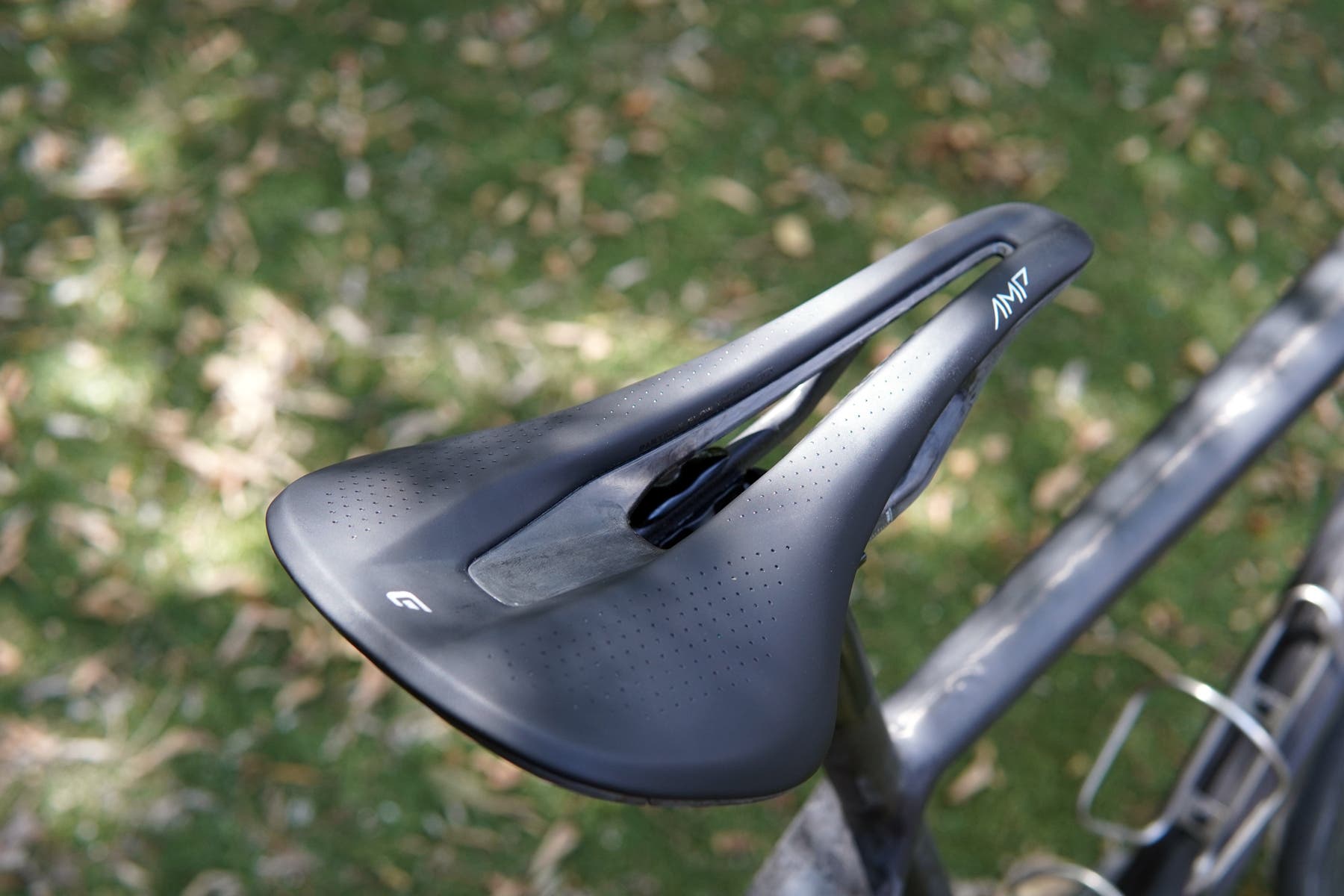
These caveats are ones you’ll find with other performance-oriented saddles, however. Neither is the end of the world, and neither is something that would dissuade me from heartily recommending this saddle.
But what might be the end of the world is the price. $315 is substantial money for what is essentially a wear item (a long-term wear item, but one nonetheless). Comfort is priority one, and I’ve found it in spades here. But it does make me wonder if I can’t find similar comfort in something that doesn’t have quite-as-exotic construction.
ADVERTISEMENT
Conclusion
Writing a saddle review can be a challenge. Each saddle model is such a personal choice that the only way to find out if it works is to sit on one yourself and, better yet, go ride it. Often, you’ll recognize quickly whether or not a saddle shape works for you. But other times, it’ll take a while before you find discomfort.
While it took me a while to find a happy home with the Boost, I immediately found comfort in riding atop the Cadex Amp. It does a great job of accommodating an aggressive riding position, it keeps me locked in place, and it does so without too much fatigue.
That said, if you’re looking for a saddle that accommodates an aggressive riding position, you don’t tend to move around the saddle too much, and you’re looking to cut weight, the Cadex Amp is a worthwhile choice and one I’ll often recommend.
Price: $315 USD / £249.99 / €249.99
ADVERTISEMENT