Published June 26, 2025 04:12AM
From Baja Mexico to the Maglia Rosa: The Incredible Rise of Isaac del Toro
Del Toro shocked the cycling world by nearly winning the 2025 Giro d’Italia. Velo uncovers the remarkable journey of Mexico’s new cycling star, from mountain biking in Baja to the pink jersey.
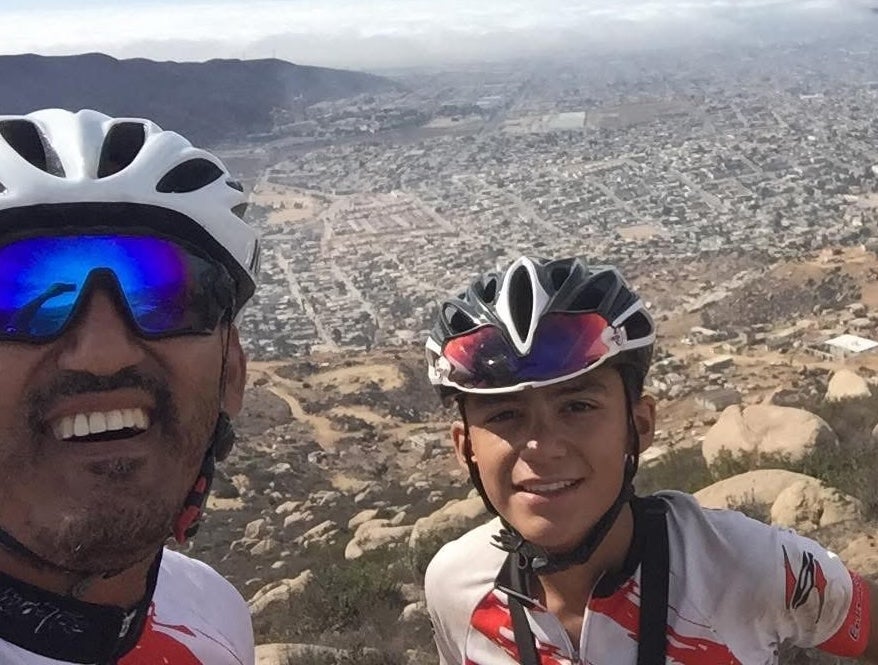
Del Toro, pictured here with his father, was raised in Baja California. (Photo: Special to Velo)
The Giro d’Italia has crowned many prodigies over the decades, but none quite like Isaac del Toro.
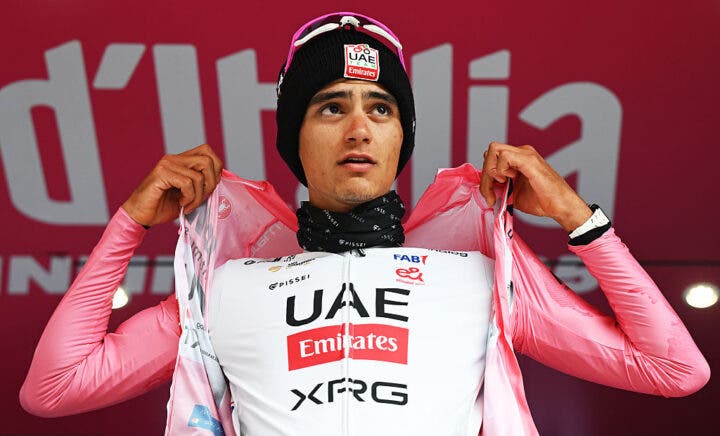
Del Toro, a 21-year-old from the dusty streets of Ensenada, Baja California, stunned the cycling world in May by seizing the maglia rosa and nearly winning it after holding on for 11 days.
He was the first Mexican rider ever to lead the Giro and only the second to win a stage in the Giro’s century-plus history.
For nearly two weeks, “El Torito” carried not just the pink jersey, but the hopes of a once-proud cycling nation that today is left without a sanctioned cycling federation supporting their athletes and one which has wandered two decades in the desert of cycling without producing a racer of his caliber.
That he emerged from Mexico’s dysfunctional cycling system, and not from one of Europe’s established talent pipelines or Colombia’s climbing meccas, makes his meteoric rise all the more extraordinary.
ADVERTISEMENT
“Obviously I am super happy to finish second, I need to be mature with this and, of course, a lot of people are surprised that I can be at this level now,” Del Toro said diplomatically after losing the pink jersey on the Giro’s penultimate stage. “For sure it’s always disappointing to lose the leader’s jersey. We cannot manage a victory, but it’s cycling and that’s why we love it.”
For those who’ve shared his journey, this was less of a shock than a confirmation of what they already knew.
Also read: Who is the Mexican prodigy who might win the Giro?
Long before turning heads with his Tour de l’Avenir victory in 2023 — less than a year after breaking his femur in a training crash — Del Toro has made a habit of surpassing expectations.
From a scrawny kid racing mountain bikes to the cusp of winning one of Europe’s most prestigious stage races, how did this phenomenon — some are already calling him the next Tadej Pogačar — seemingly burst onto the scene?
It’s a fascinating story of dedication, love for cycling, family passion, perserverence, and pure racing talent.
ADVERTISEMENT
Velo takes a deep dive into his amazing backstory and personal journey, speaking exclusively to his family and coaches to reveal how this cycling sensation defied the odds every pedal stroke along the way.
Early development in Baja California
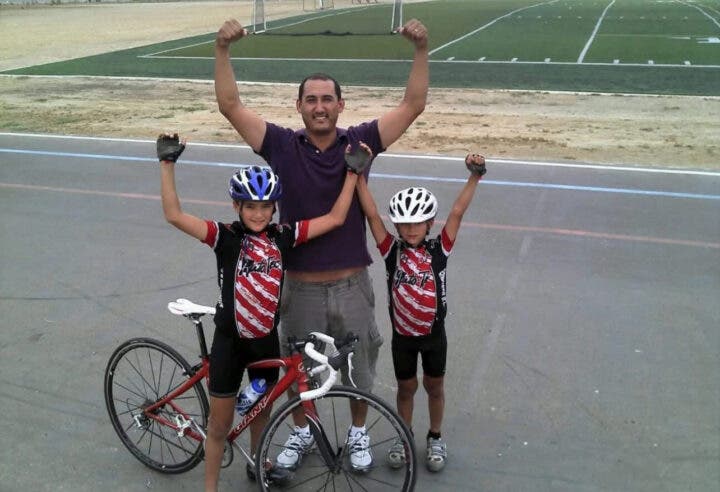
Isaac del Toro’s cycling journey began in Ensenada, Baja California, a coastal town just south of Tijuana perhaps more famous for the Hussong’s Cantina than producing world-class cyclists.
His family didn’t come from money, or even from a deep athletic background. But they did come from passion, and that was more than enough for his father, José, to get his sons—Isaac and his older brother Ángel—on bikes at an early age.
“Once the boys were older, I started them in mountain biking – I believe Isaac was 9 at the time,” José del Toro told Velo. “We would race small events we could find near us, before connecting with a local junior coach, Jose ‘Chon’ Acevedo.
Also read: UAE protecting Del Toro from comparisons to Pogačar
“My family was never interested in other sports. Cycling was the only sport that I knew, and so my boys too became fanatics. Once the boys started, they were participating in it every day and in multiple disciplines—whether in downhill, road, or mountain biking.
ADVERTISEMENT
“They were so enamored by it, they wanted to ride every day,” José said. “When we got to nationals, they finished on the podium nearly every time.”
The passion was born.
First coaches, first successes
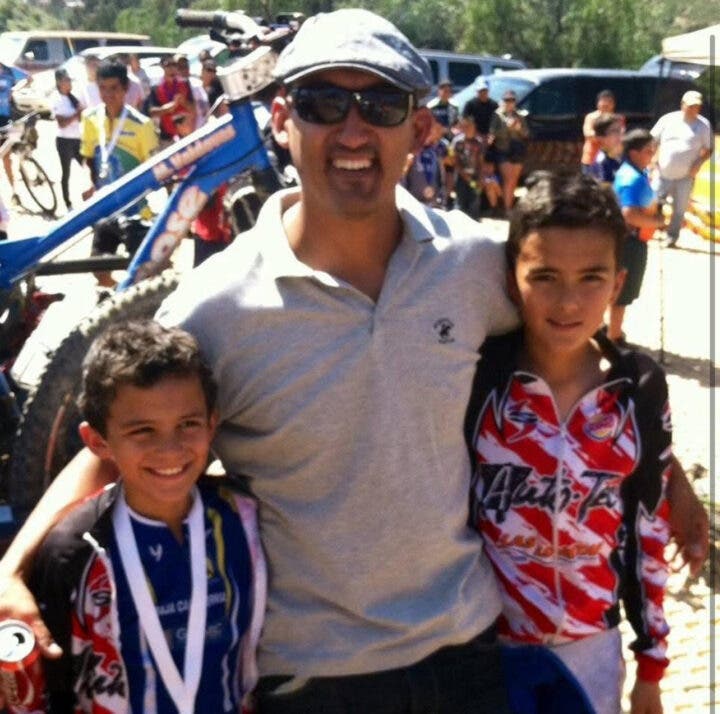
The boys would travel with coach Acevedo while José did his best to provide what he could financially working in construction. Isaac never had the newest equipment — he was often on used bikes with basic gearing — but his passion for the sport was almost immediate.
“I personally have to thank Chon Acevedo,” José says. “For me as a father, what Acevedo did for my boys in a sport that it is so harsh—if you can imagine— for someone who is not their father, taking them to all the races and helped train them when I was not able to, was huge.”
Others would also contribute, like the Cruz family, who helped the boys gain results at nationals.
ADVERTISEMENT
Former Mexican national champion and recent Redlands Bicycle Classic winner Eder Frayre, a native of Ensanada himself, offered his experience and guidance as well. Frayre will often join Del Toro in training when they are both in town.
The months and soon years would pass. By this time, the boys were riding nearly every day, prepping for the next race.
The family faced hardships due to the costs, along with periods of separation between Isaac’s parents, something that deeply affected both boys, according to their father.
“I was trying to figure out what the next step would be for Isaac. He was doing very well nationally, but I knew that it’s not just money that we needed,” José continues. “They needed good coaches with adequate experience. Another important thing was learning where to take them for further development and with whom. It was a very hard and complicated thing.”
ADVERTISEMENT
Fast track to Europe with A.R. Monex
José soon stumbled upon a Facebook post by a new cycling program in Mexico named A.R. Monex Pro Cycling. The new development project launched by brothers Alejandro and Luis Ramses Rodriguez, was organizing a talent identification camp.
“I was able to speak with them, and shortly handed the phone over to Isaac. An hour later, Isaac told me he would be going. It happened so fast—in that moment, I began worrying about money.”
ADVERTISEMENT
Isaac arrived to camp with eyes wide open, José recalled, realizing just how much he still had to learn. Despite his initial doubts — and the dozens of riders trying out at the camp — the team signed him. He was soon off to Europe, a move that would launch his professional trajectory.
“Isaac called me during that first trip and told me, ‘Dad, this is impossible. I don’t understand how they go so fast, it just cannot be.’ For him, it was incredible because his level of cycling was very novice. The sport is far inferior here in Mexico compared to the level in Europe. He just thought it was impossible.”
Despite its early success, A.R. Monex faced an uphill battle to grow. The team’s vision to expand beyond junior development into a full road program and eventually launch a women’s squad often clashed with Mexico’s national cycling federation, which preferred athletes remain at home to develop within the country.
It was only through a combination of private determination and public support that the team endured.
ADVERTISEMENT
Thanks to CONADE, Mexico’s government sports agency, and a grant secured through the country’s tax authority, A.R. Monex was able to keep its European pipeline open.
And with that, Del Toro found his foothold in Europe.
“Without them,” José says, “there is no way Isaac would have been able to remain in Europe and do what he did.”
Carving his own path
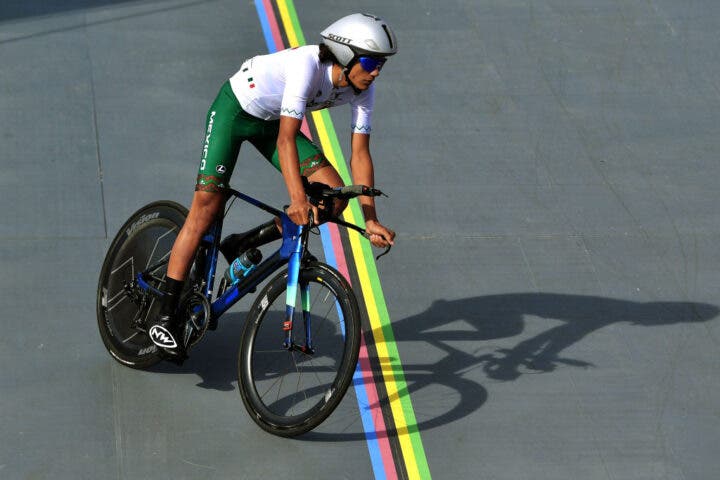
Others had tried before, but mostly as individuals. Mexico’s federation had long resisted sending riders abroad, except for high-profile events like the world championships, Pan American Games, or the Olympics.
A.R. Monex co-founders Alejandro and Luis Rodríguez dreamed of changing that. Inspired by European models, they aimed to build a structure capable of discovering and supporting young talent, if they could first convince families to trust them.
ADVERTISEMENT
“It’s very difficult for the riders – the distance, the culture, the different language – and we were lacking money. A.R. Monex provided a lot but not everything,” José says. “The basics of what the team was able to cover were not sufficient. People in Mexico think the riders were treated like kings; they did what they could.”
That sacrifice weighed heavily on the Del Toro family. Isaac was just 15 when he left home, and his time back in Ensenada has been minimal ever since.
Also read: Del Toro signs cycling’s longest contract
“The money was the most difficult part for us, apart from the distance between us. He was so far from his mother, but cycling is very complicated,” José said.
“I remind people that Isaac would not have been able to further develop like he did had he remained in Mexico. Since that first trip, he has returned home for one month a year. It’s very little, if you can imagine how that was for us to allow him to go at such a young age. It was a major sacrifice for us, but especially Isaac being on his own.”
Still, the family believed. From early on, José had sensed that one of his boys could go far in the sport. He saw the discipline, the passion, the drive, and knew it wasn’t a passing phase.
ADVERTISEMENT
“For those who don’t know him, they are incredibly impressed by his recent success,” José said. “For me, it gives me such pleasure to see what he is accomplishing, but I am not as impressed because I have known what he has been capable of. He has always been someone who is incredibly dedicated. Since he started, every minute has been focused on cycling and what could help him improve. From his training, to what he would eat, his free time, it was all about cycling.”
Sleeping with his bike in bed
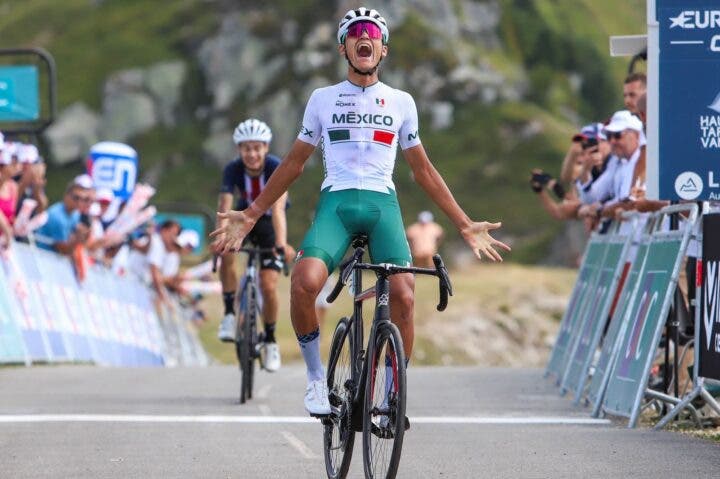
Like any young, eager pro, Del Toro would sometimes push himself too hard.
His former coach and retired pro, Gerardo Medina, remembers the challenge of keeping his young rider from overtraining, even as he recognized that the intensity came from a place of deep focus and self-awareness.
His big breakout came in 2024, when he climbed high in the Alps to win the Tour de l’Avenir, the harbinger of great things to come in the pro ranks that’s been won by the likes of Pogačar, Nairo Quintana, and Greg LeMond.
After UAE Emirates-XRG won the bidding war for his signature, Del Toro made a splash in his WorldTour debut in 2023 by winning a stage at the Santos Tour Down Under, and later claiming his first pro GC win at the Vuelta a Asturias.
ADVERTISEMENT
Reflecting on Del Toro’s breakout performance at the Giro d’Italia, Medina says he wasn’t surprised in the slightest.
“Isaac is such a smart young man who is aware of what he needs to do and how. The training load I would assign him didn’t seem to affect him as much,” Medina told Velo. “A sign for me that he was next level.
“When you’re young, you know you’re strong but what that means and learning about it in the context of a professional sport is different. From my time working with Isaac, he was never scared of anything, he was conscious when he first arrived to Europe knowing it would be hard and different, but he was always ready for the challenge.”
Also read: Meet Mexico’s first UCI-certified sport director
Del Toro’s seemingly meteoric rise is inspiring a nation, with Mexican fans turning up at races and taking to social media to show their support for its budding superstar.
ADVERTISEMENT
His father, José, echoes that same pride and resolve when speaking about his son’s rise and resilience.
Asked what he wants the world to know about Isaac, José doesn’t hesitate.
“There has never been a secret to his current success,” José said. “It has always come down to his dedication he has shown from the very beginning. I have never known a person to sleep with his bike in bed. I am not joking, as a kid he would sleep with his bike at times!
“We are all so, so happy for him because we know the sacrifices he has made. I listen to the comments from his past teammates at Monex, they would often say how he was always wanting to do more, work harder. That’s Isaac.”
What began in Ensenada now a professional journey that’s inspiring a nation, and it’s only just begun.