Updated December 4, 2024 03:00PM
How Much Do Pro Cyclists Earn? Average WorldTour Salary Climbs to €500,000 as Team Budgets Boom
New report shows pro cycling is getting richer, but it still pays pennies compared to many mainstream sports.
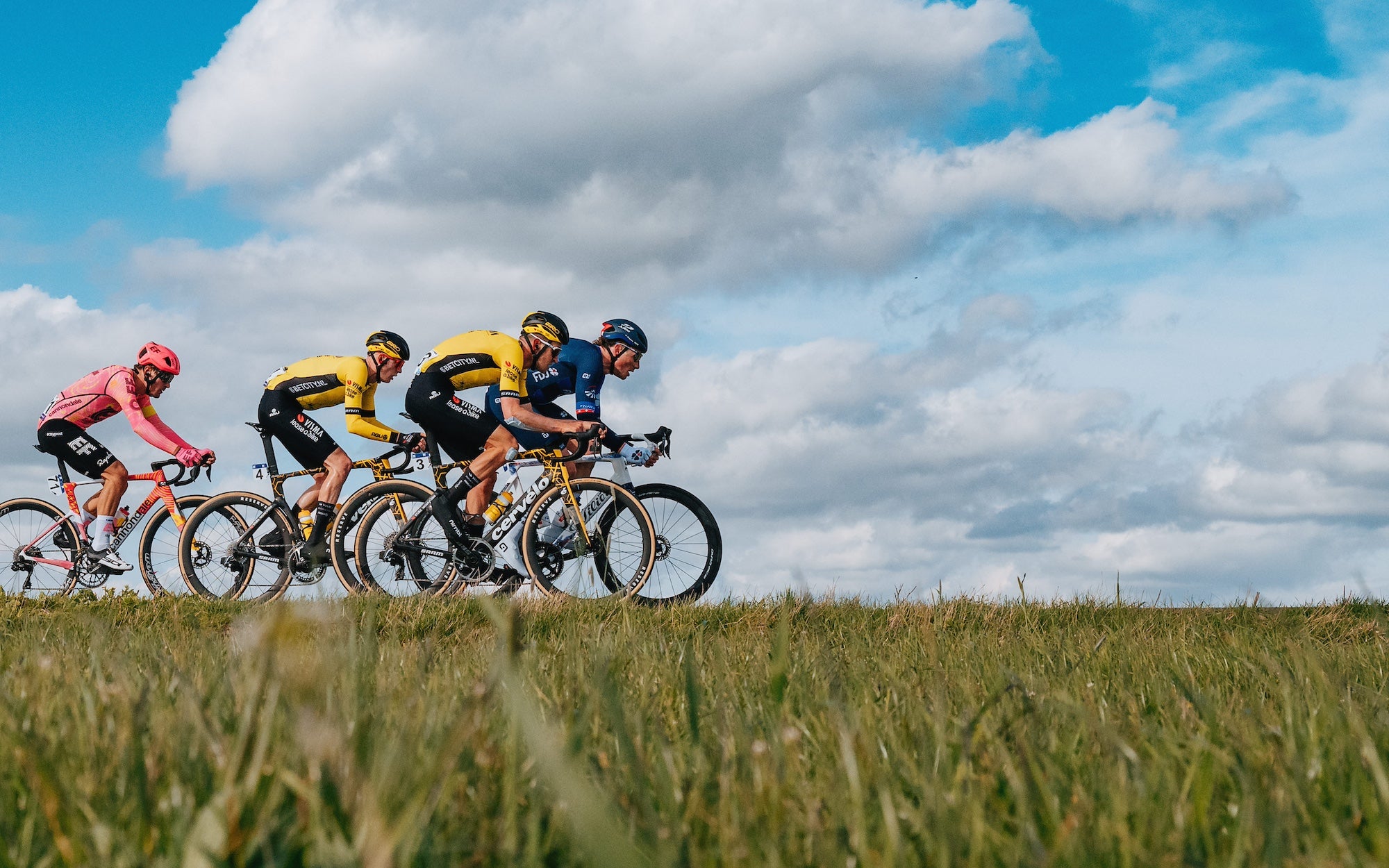
(Photo: Gruber Images / Velo)
The men’s WorldTour is richer than ever before.
A report published by La Gazzetta dello Sport shows a wave of blockbuster team backers and the exponential professionalization of the sport is padding the pay-packet of the peloton’s top tier.
The average salary in the men’s WorldTour now stands at a sweet €500,000 ($530,000 USD) per year.
Official UCI figures reviewed by Gazzetta at the recent UCI seminar in Nice showed the average male salary will increase more than 10 percent this off-season.
The 2024 figure of €449,000 will nudge on a half-million in 2025.
Sweet deal?
Yes and no.
The €500,000 average is a pittance compared with Tadej Pogačar’s bank-breaking €8 million (~$8.4 million USD) annual pay.
But then not all riders pack Pogi’s powers, or a salary bankrolled by the United Arab Emirates, either.
Pay increases are of course supported by escalating team finances.
ADVERTISEMENT
Gazzetta reports this week that the total WorldTour budget will be in the region of €570 million in 2025. That’s €140 million more than in 2022, a stout 33 percent increase in just three years.
The recent arrival to pro cycling of big backers like Lidl, Decathlon, and Red Bull has dragged total sponsor dollars upward. The average team budget of €28 million in 2024 will become €32 million next year.
The financial heft of giant Chinese manufacturer XDS will extend that trend when it launches with Astana-Qazaqstan in 2025.
The gender gap
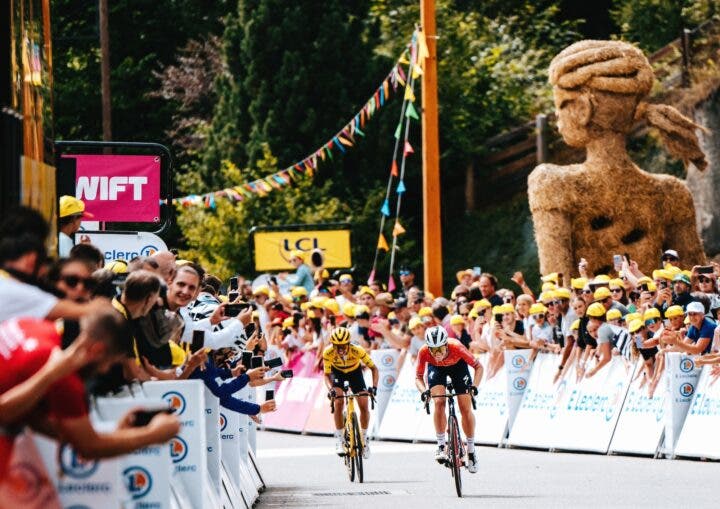
Women’s WorldTour salaries are following a similar pattern to those in the men’s peloton. But there’s still a gaping chasm between male and female pay.
Salaries in the women’s WorldTour are currently thought to be around €85,000, but rising.
Demi Vollering‘s rumored €1 million contract offer this summer from UAE ADQ before she signed to FDJ-Suez is considered to be a high-water mark.
Women’s cycling is growing fast.
ADVERTISEMENT
Ongoing commitment from race organizer ASO and the sponsor coffers of Zwift are putting the Tour de France Femmes and Paris-Roubaix Femmes on the worldwide sporting map.
Gazzetta states the total budget of the Women’s WorldTour has doubled to €70 million since 2022. But there’s clearly a long way to go before a bridge is built between the gender gap.
The WorldTour wedge
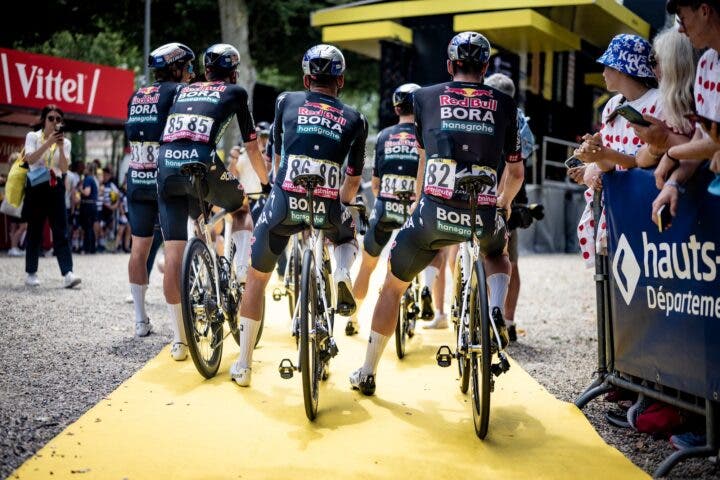
The average team budget of €32 million doesn’t reflect the reality of a men’s WorldTour that’s richer, more sophisticated, and maybe more divided than ever.
For every €50-60 million state-backed UAE Emirates, or €50 million Bora-Bull, there’s a €14 million Intermarché-Wanty.
Directors at the Belgian team recently told HLN that financially, 2024 was “perhaps the most difficult” in the team’s existence.
A UAE Emirates domestique like Jay Vine or Pavel Sivakov would be a GC leader with the cash-strapped Intermarché mob.
It’s a cruel disparity that’s driving a wedge between the peloton’s haves and have-nots.
ADVERTISEMENT
It’s not a coincidence that the richest teams — UAE Emirates, Visma-Lease a Bike, Red Bull-Bora-Hansgrohe et al — are also the most successful.
Big budgets buy the best riders and staff. They also fund the altitude camps and technological testing that are punchily-priced tickets to the top.
“To win the Tour de France you need to have a budget of 50 to 60 million euros,” Cofidis boss Cedric Vasseur told Velo.
The French team is at minnow status in the budgetary ranking.
“If you want to have a chance to sign those riders like Pogačar and Vingegaard, and to have the domestiques and staff around to make that happen, anything under 50 million, there is no chance,” Vasseur said.
Likewise, for every Pogačar or fellow top earners Primož Roglič, Jonas Vingegaard, and Remco Evenepoel, there are countless first- and second-year pros patching their tubes and praying for a pay rise.
The UCI minimum wage will be set at €44,150 in 2025 for men’s WorldTour pros. That’s less than 10 percent of the peloton’s average earnings.
ADVERTISEMENT
Heck, Pogačar’s off-salary personal sponsorship package pays more than that mandated minimum.
Making pro cycling salaries look like loose change
The UCI is digging into the possibility of a budget cap system to level out the disparities in its marquee road league.
The Escape Collective recently wrote that the governing body is working with the brainiacs at business consultancy PwC to create some form of financial fairness framework.
That said, pro cycling is still impoverished in the wider sporting landscape.
Like retired pro-turned-media pundit Tejay van Garderen recently said, salaries in sports like Formula 1, soccer, NBA, and NFL make Pogačar’s €8 million look like loose change.
“If you look at the NBA, $8 million a year would get you someone to come off the bench, a bit of a journeyman,” Van Garderen said on an NBC “Beyond The Podium” podcast. “The highest-paid guy, Steph Curry gets $45 million a year. I know it’s hard to compare, but still.”
ADVERTISEMENT
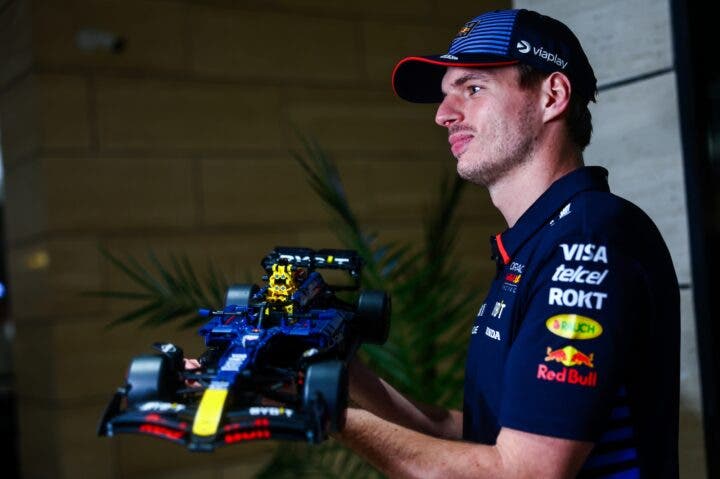
Red Bull’s F1 dominator Max Verstappen is worth €53 million per season.
Manchester City footballers Kevin de Bruyne and Erling Haaland earn more than €25 million each.
Patrick Mahomes, star quarterback at the Kansas City Chiefs, earns an estimated $45 million (€43 million) annually with salary and bonuses.
The takeaway?
Pro cycling is getting richer, but it’s still a rounding error in the total sporting balance sheet.